7 Min Reads
What Is an AI-Powered Skill Management System? A Buyer’s Guide

Summarise This Page with AI



Summary Key Takeaways:
- The Core Shift: Legacy HR spreadsheets and static skill matrices fail because skill data decays rapidly. Modern enterprises are moving toward dynamic workforce visibility to build true AI workforce readiness.
- The Solution: An AI-powered skill management system continuously ingests work artifacts, project records, and learning credentials to build living, real-time talent profiles while powering your internal job portal and talent marketplace.
- Business Impact: Organizations deploying AI-driven skill platforms achieve faster project fulfillment, higher internal mobility, reduced bench costs, and lower recruitment overhead.
- Key Evaluation Criteria: When choosing a solution, prioritize automated skill inference, dynamic taxonomy updating, deep system integration, and strong data privacy governance.
As business strategies rapidly evolve, static spreadsheets leave enterprise leaders blind to actual workforce capabilities. To eliminate staffing bottlenecks, forward-thinking organizations are adopting AI-powered skill management to automatically discover, verify, and map talent in real time. This buyer's guide walks you through evaluating and selecting the ideal platform for your business.
What Is an AI-Powered Skill Management System?
At its core, an AI-powered skill management system is a technology layer that sits on top of your existing HR stack. It pulls in signals from resumes, project records, learning history, performance reviews, and external sources like GitHub or LinkedIn. Machine learning models then translate all of that raw data into structured skill profiles for every employee, establishing a foundation of verified skill data.
The "AI-powered" part matters because it changes who does the work. In a traditional setup, employees or managers fill out skill surveys once or twice a year. Those surveys go stale within weeks. A system built for skills intelligence instead infers and updates skills continuously, based on what people are actually doing. When someone finishes a certification or wraps up a project using a new tool, the system picks that up and adjusts the profile without anyone filling out a form—delivering clear, real-time insights into overall AI workforce readiness.
Traditional skills management software tools primarily store and organize skill data, often relying on manual inputs and periodic updates. An AI-powered skill management system goes further by continuously inferring, verifying, and updating skills based on real-world work signals to directly drive internal mobility and match employees with opportunities through an intelligent internal job portal. It is also different from a generic learning management system, which tracks course completions but rarely connects those completions to actual project outcomes or staffing decisions. In short, AI and continuous updating turn skills management software from a static system of record into a dynamic source of workforce intelligence.
Why Are Organizations Investing in Skills Intelligence Now?
The honest answer is pressure from two directions at once. On one side, skills are changing faster than job descriptions can keep up. The World Economic Forum's Future of Jobs Report 2025 found that employers expect nearly 39 percent of workers' core skills to shift or become outdated between 2025 and 2030. That is a huge share of your workforce operating on skill sets that will not look the same in five years.
On the other side, leadership teams are increasingly focused on demonstrating the measurable business value of their skills investments. Deloitte's research on skills-based organizations has repeatedly pointed to measurable gains in agility and cost efficiency for companies that shift decision-making away from job titles and toward verified capabilities, a trend covered in Deloitte's coverage of skills-based hiring.
Gartner has been tracking a similar shift among technology leaders. In a recent release, Gartner projected that by 2027, 90 percent of CIOs will have implemented a skills-based approach to at least part of their talent management process, a sharp jump from where things stood just a couple of years earlier, according to Gartner's talent management trend research.
Put those two forces together, and you get the real driver behind AI-powered skill management adoption. Companies cannot afford to guess who has what skills anymore, and they cannot afford to spend months updating spreadsheets manually while the market moves on without them.
Why Are Traditional Skills Tracking Methods Failing Enterprise Teams?
For decades, organizations managed employee skills through basic HR portals or manual spreadsheets. While these tools seemed cost-effective initially, they create severe operational friction as companies scale.
.avif)
How Does an AI-Powered Skill Management System Actually Work?
Most platforms follow a similar sequence, even if the branding differs.
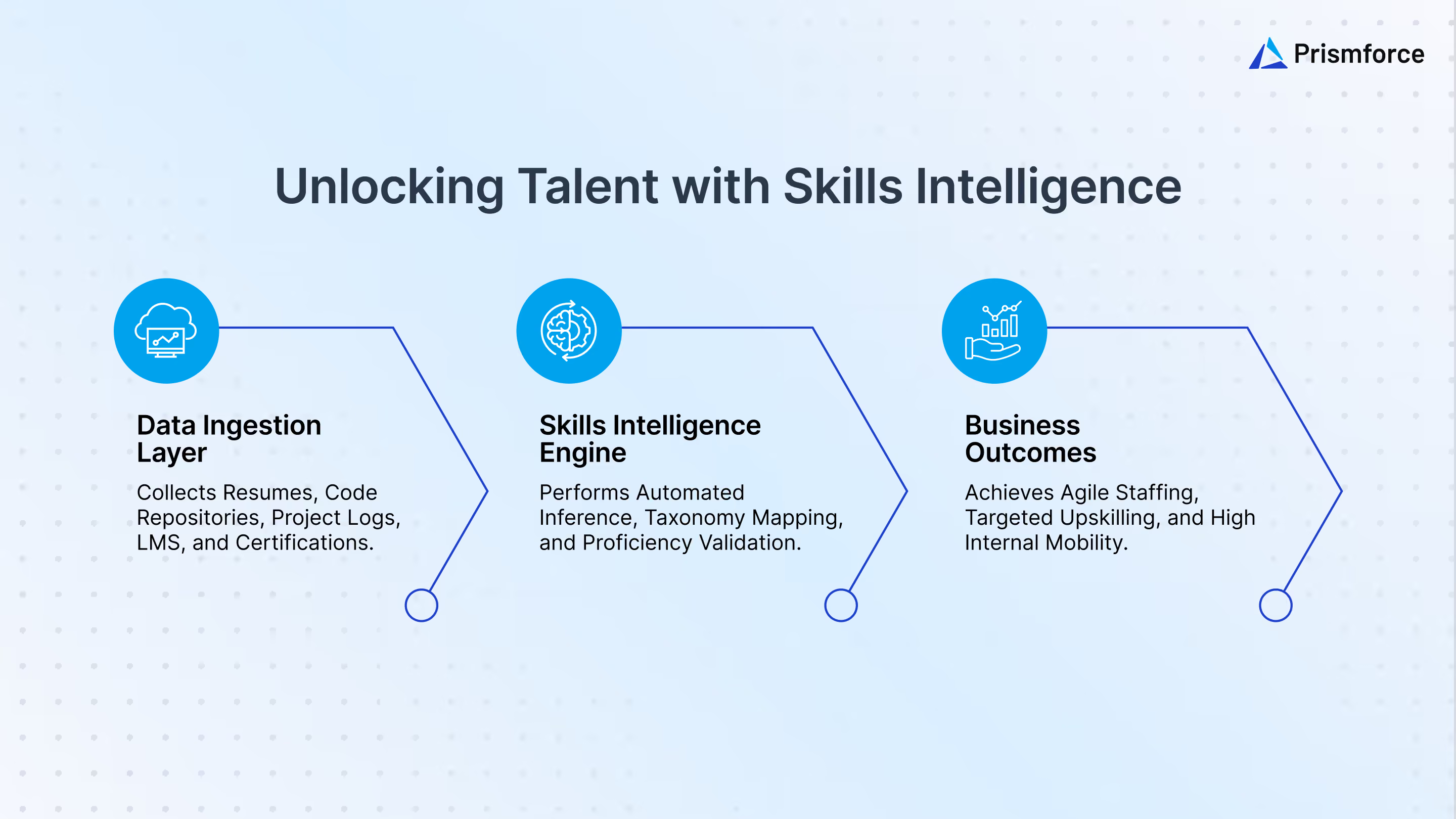
Data aggregation. The system connects to your HRIS, project management tools, learning platforms, and resume repositories. Some platforms, including Prismforce's skills management platform, also pull signals from professional and technical profiles with employee permission, which helps fill gaps that HR systems alone would miss.
Skill inference. Natural language processing models scan this data and match it against a skill taxonomy, essentially a structured dictionary of skills, proficiency levels, and how they relate to one another. A good skill taxonomy also maps adjacent skills, so the system can suggest that someone with strong Python experience is a reasonable candidate to pick up a machine learning framework quickly.
Continuous updating. Rather than relying on a once-a-year refresh, the system continuously updates employee skill profiles automatically based on signals from projects, completed courses, newly adopted tools, and other work activities. Employees can then validate, confirm, or add skills when prompted, helping improve the accuracy of their profiles. This combination of automated skill inference and lightweight employee validation keeps skill data current without placing the burden of maintaining it entirely on employees.
Matching and forecasting. Once skill profiles are reasonably accurate, the platform can match people to open roles or projects, flag emerging shortages before they become urgent, and recommend learning paths that close specific gaps. This is where a true skills intelligence platform earns its keep, turning a static database into an active planning tool.
What Core Features Should You Look for in Skills Management Software?
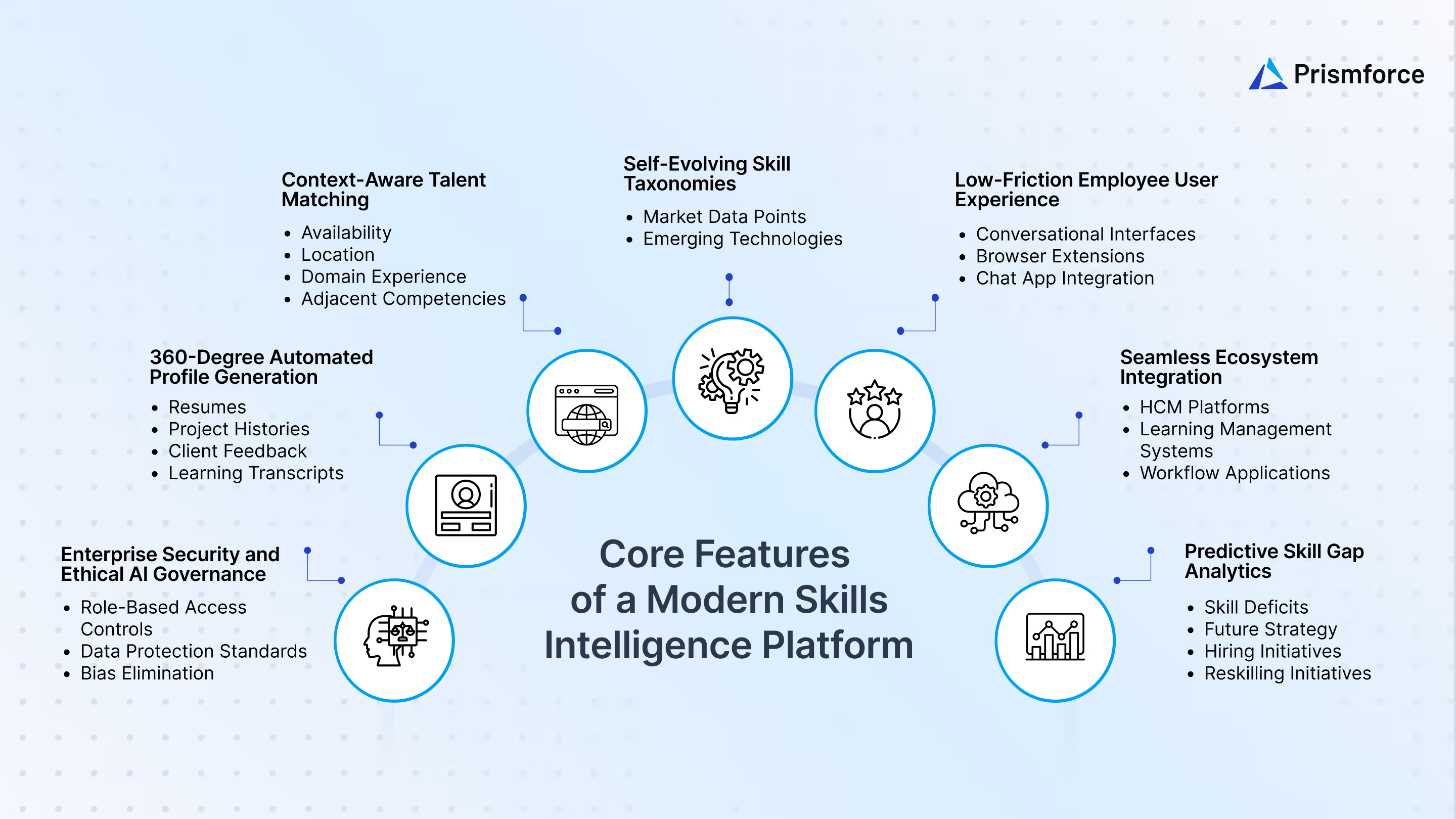
Not every product that markets itself as AI-powered skill management actually delivers on the promise. Here are the features worth checking for during evaluation.
- Automated skill extraction. The system should build skill profiles from existing data sources with minimal manual entry required. If a vendor's demo leans heavily on employees typing in their own skills, that is a warning sign, not a feature.
- A living skill taxonomy. Skills evolve, and your taxonomy needs to evolve with them. Ask how often the taxonomy updates and whether it reflects market-level skill trends, not just internal job titles.
- Confidence scoring. Every inferred skill should come with some indication of how reliable that inference is. A system that treats every guess as equally certain will erode trust with managers fast.
- Integration depth. Check whether the platform genuinely integrates with your systems of record, such as Workday, SAP SuccessFactors, or ServiceNow, rather than relying on periodic file uploads.
- Career and learning pathways. Skill data becomes far more valuable when it feeds directly into personalized learning recommendations and career mapping, similar to what a dedicated career development platform provides. Otherwise you end up with an accurate inventory that nobody acts on.
- Privacy and governance controls. Employees need clarity on how their skill data gets used, especially when inference draws on external profiles. Look for granular permission settings and transparent audit trails.
What Should You Look for in a Skills Intelligence Platform Vendor?
Beyond the product features, the vendor relationship matters just as much. A handful of questions tend to separate serious platforms from marketing decks.
- Ask for accuracy benchmarks. Reputable vendors provide precise inference metrics, like achieving 97% precision in AI search and matching, backed by real measurement methodologies.
- Ask how skill capture actually happens. Effective capture balances automated extraction with lightweight validation—driving 2–4x greater skill discovery without creating heavy administrative friction for employees.
- Ask about taxonomy depth. Platforms backed by deep knowledge graphs—featuring 25,000+ skill nodes and 500,000+ relationships—deliver rich industry specificity that simple keyword matching cannot match.
- Ask about deployment timelines. Ensure the vendor offers a clear, rapid path to initial usable output so your skills program doesn't drag on for a year.
- Ask who owns the roadmap. Verify how frequently the vendor retrains its underlying AI models and updates its core taxonomy.
- Ask for reference customers in your size band. Confirm performance stability at enterprise scale, ensuring the platform scales effortlessly from 2,000 to 50,000+ employees.
- Ask about change management support. Look for vendors with proven track records of driving user adoption, trust, and long-term organizational value.
How Do You Calculate ROI Before You Buy?
Buyers often struggle here because skills programs produce a mix of hard and soft returns. A few areas are worth modeling before you commit a budget.
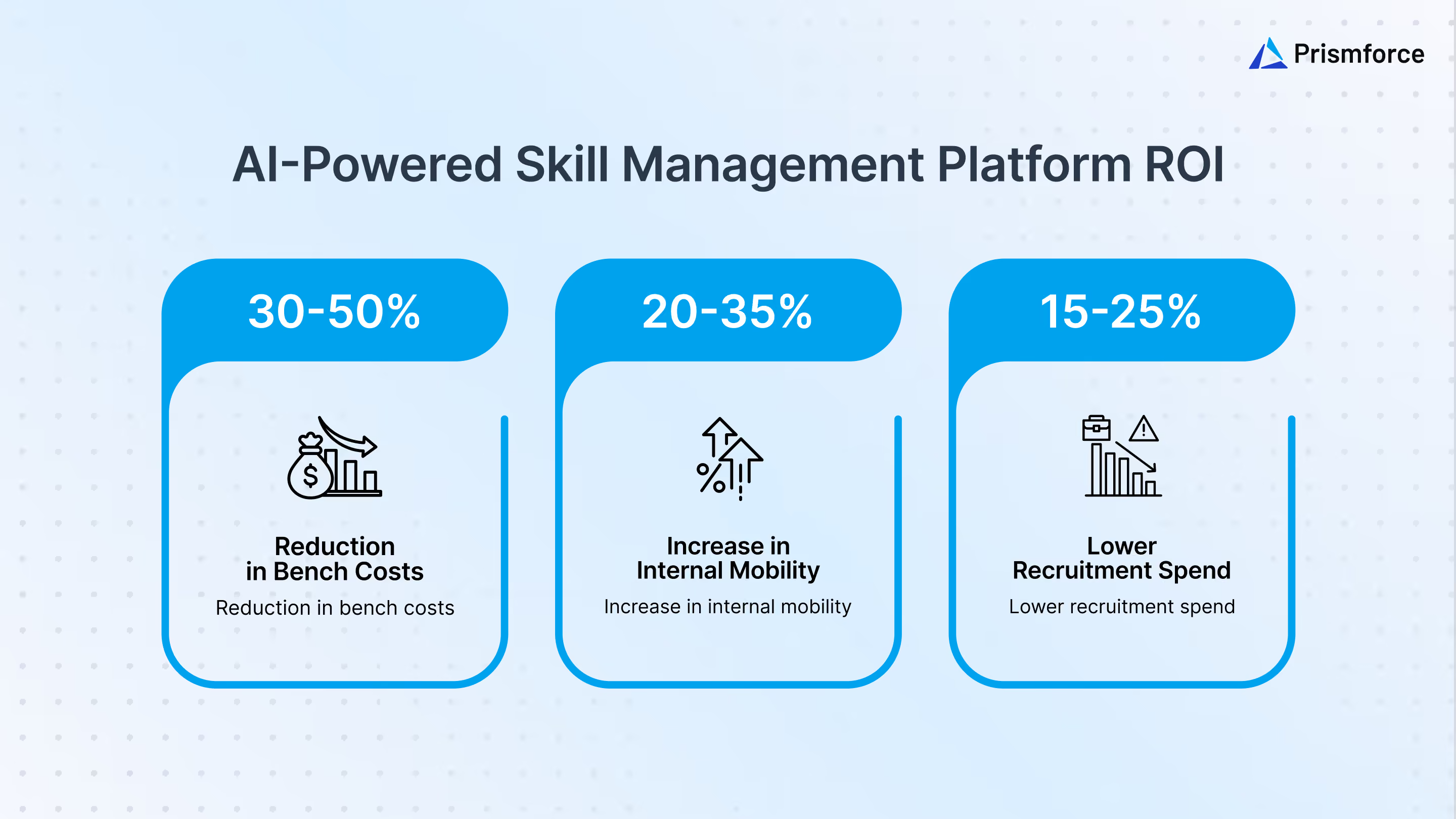
Start with internal fill rates. If your organization currently relies heavily on external hiring because you cannot locate internal talent with the right skills, an AI-powered skill management system that improves internal mobility can meaningfully cut recruiting costs.
Look next at bench time and staffing speed, particularly relevant for professional services and technology firms. Faster, more accurate matching between people and projects directly affects utilization and revenue.
Finally, factor in reskilling efficiency. When learning recommendations are tied to verified skill gaps rather than generic course catalogs, completion rates and relevance both tend to improve, which shortens the time it takes to close a critical gap.
What Should Buyers Consider When Choosing a Skills Management Platform?
A few patterns show up again and again during failed rollouts. Buyers sometimes choose a platform based purely on AI capability without checking whether it integrates well with existing HR systems, which leads to data silos. Others underestimate the change management effort, assuming employees will adopt a new tool simply because leadership announced it. Some organizations also treat the taxonomy as a one-time setup task rather than something that needs ongoing curation as roles and technologies shift.
The organizations that get the most value tend to start with a narrower use case, such as internal staffing or a single business unit, prove out accuracy and adoption there, and then expand. Trying to boil the ocean on day one is the fastest way to lose executive sponsorship.
Conclusion
An AI-powered skill management system should do more than maintain an employee skills database. It should continuously surface workforce capabilities, identify emerging skill gaps, connect people to relevant opportunities, and help leaders make faster, skills-informed decisions about staffing, development, and workforce planning. This becomes especially important for technology and professional services organizations, where skills evolve rapidly and the ability to deploy the right talent to the right projects directly impacts utilization, delivery, and growth.
That is the philosophy behind our approach to skills intelligence software, built specifically for technology and professional services organizations where skill velocity is highest and the cost of getting staffing wrong is steepest. If you are evaluating vendors and want a second opinion on what good actually looks like, get in touch with our team and we will walk you through it.
Frequently Asked Questions
Get exclusive access to workforce and talent insights
Thank you! Your submission has been received!
Oops! Something went wrong while submitting the form.
Demo Prismforce products
Get in touch with our experts and sign up for a demo