6 Mins Read
A Buyer's Guide To Talent Management Software | Prismforce


Summarise This Page with AI



Summary: Key Takeaways
- Buyer's remorse is common, not rare. Roughly a third of HR leaders regret their most recent tech purchase, and most of the reasons trace back to questions nobody asked during the sales process.
- Demos are built to impress, not inform. Vendors control what you see in a demo. The questions in this guide are designed to get past that and into how the software actually behaves under real conditions.
- Integration and data quality matter more than feature lists. A talent management platform with a long feature checklist still fails if it can't talk cleanly to the systems you already run.
- Ask about the relationship, not just the software. Support, pricing changes, and roadmap ownership tend to matter more a year in than they do during the pitch.
Here's a number worth sitting with before your next vendor call: nearly a third of HR leaders say they regret their most recent technology purchase, according to SHRM's research on tech buyer's remorse. That's not a small miss. That's a six or seven figure decision going wrong, usually because the buying team asked about features and pricing but never got specific enough about implementation, data, or what happens after the contract is signed. This guide walks through 12 questions worth asking any talent management software vendor before you commit, plus a few red flags that tend to show up in demos when something's being glossed over.
What Should You Actually Get Out of Talent Management Software Before You Buy It?
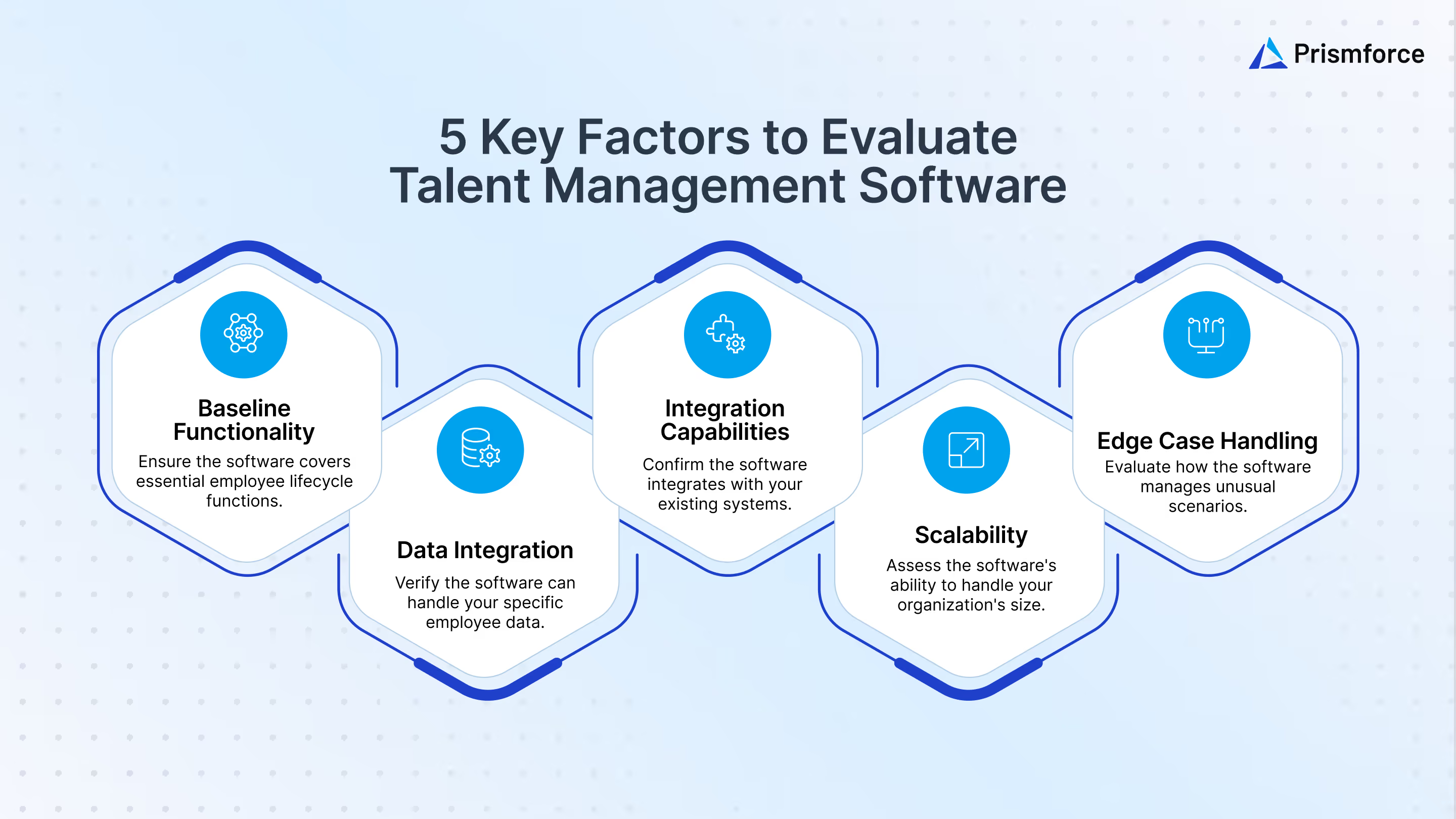
Before getting into the questions, it's worth being honest about what talent management software is actually supposed to do for you. At a baseline level, it should give you one connected system for the employee lifecycle: recruiting, onboarding, performance, learning, succession, and often compensation. That part is table stakes now, and most vendors clear that bar.
Where deals go sideways is usually further downstream. Buyers assume that because a platform handles all those functions well in a demo, it'll handle their specific data, their specific integrations, and their specific scale just as smoothly. It often doesn't. A talent management solution that looks identical to three competitors on a feature comparison chart can behave completely differently once real employee data and real edge cases show up.
This is exactly why the questions below matter more than the feature list. They're designed to surface the stuff that doesn't show up cleanly in a sales deck.
What Are the 12 Questions You Should Ask Every Talent Management Software Vendor?
1. How long does implementation typically take for a company our size? Ask for a real number, not a range designed to sound impressive. Then ask what's included in that timeline and what isn't, since data migration and change management often get quietly excluded from the headline figure.
2. What does your data migration process actually involve? Get specific about who does the work, how long it takes, and what happens if your existing data is messy, which it almost certainly is. This is one of the most common places projects stall.
3. How does the platform handle integrations with our existing HR stack? A talent management platform that claims to "integrate with everything" should be able to name the specific connectors it has built versus the ones it would need to custom-build for you. Those are very different commitments.
4. Can we see the system working with a dataset similar to ours, not a canned demo? Vendors control what they show you by default. Ask to see the platform handle a scenario close to your actual complexity, whether that's multiple entities, complex reporting lines, or high-volume hiring.
5. How often does the product roadmap actually ship new capability? Some vendors treat their talent management tools as finished products and rarely touch them again. Others iterate constantly. Ask for specific examples of what shipped in the last twelve months, not just what's planned.
6. What happens to pricing after year one? Introductory pricing is common, and so are surprise increases at renewal. Get the actual renewal terms in writing before you sign, not a verbal assurance during the sales call.
.avif)
7. How does skill and capability data get captured, and does it stay current? This is where a lot of talent management systems quietly fall short. Ask whether skill data updates on its own as people actually work, or whether it depends on employees filling out surveys that go stale within a few weeks. A skills management platform built on a solid skill taxonomy and fed by continuous skill capture changes what the talent system can actually do with that data, versus just storing a snapshot from six months ago.
8. What does support look like six months after go-live, not during onboarding? Onboarding support is usually strong across the board. The real test is whether support quality holds up once you're not a new account anymore. Ask for a reference customer who's been live for at least a year.
9. How does the platform handle reporting and analytics out of the box? Find out whether meaningful reporting requires a separate BI tool or extensive custom configuration. Plenty of platforms look strong on paper but require significant extra spend to get usable dashboards.
10. What's your approach to AI features, and how were they validated? Nearly every vendor claims AI capability now. Push past the marketing language and ask what data trained the models, how accuracy gets measured, and what happens when the AI gets something wrong.
11. Who are three reference customers close to our size and industry? Generic case studies don't tell you much. A reference customer in a similar industry and headcount range will surface issues specific to your situation that a glossy case study won't.
12. What does a realistic worst-case scenario look like? This question tends to catch vendors off guard, which is exactly the point. Ask what's gone wrong on past implementations and how it got resolved. A vendor with a thoughtful answer here is usually more trustworthy than one who insists nothing ever goes wrong.
Why Do So Many Talent Management Software Deals End in Buyer's Remorse?
The SHRM research mentioned earlier found that only 29 percent of HR leaders would actually recommend their primary HR technology platform to a similarly sized organization, a fairly striking number given how much these purchases typically cost. The research pointed to a pattern: buying teams often start evaluating vendors before they've clearly defined what problem they're actually solving, which means the eventual purchase gets judged on features and price instead of fit.
There's also a cost problem that shows up after the fact. Licensing fees are usually the number everyone focuses on during negotiation, but total cost of ownership, implementation services, custom integrations, and ongoing support tiers tend to run well past the sticker price. Asking about total cost upfront, not just the license, avoids a lot of budget surprises down the line.
A related issue is who actually gets consulted before the purchase. Buying decisions that involve only HR tend to miss integration and security concerns that IT would have flagged early. Decisions that involve only IT sometimes end up with a technically sound platform that HR teams find clunky to actually use day-to-day. The organizations with fewer regrets tend to build a cross-functional evaluation team from the start, rather than looping other departments in after a vendor has already been selected.
Mercer's Global Talent Trends research has flagged a related shift worth noting here. As organizations lean more heavily on workforce data to make faster decisions, the gap between platforms that genuinely support that and platforms that just claim to has become more visible, a trend covered in Mercer's Global Talent Trends 2026 report. Buyers who ask sharper questions upfront tend to end up on the right side of that gap.
What to Watch Out for in Software Vendor Demos?
A few patterns tend to show up when something's being smoothed over.
The vendor drives the entire demo without ever asking about your specific use cases. A Gartner analyst interviewed by SHRM put it plainly: letting the vendor control the demo means you only see what they've decided to show you, not what actually matters for your situation, a point raised in SHRM's guide to choosing a new HCM system.
Pricing conversations get vague the moment you ask about renewal terms or add-on costs. That vagueness usually isn't accidental.
References all sound suspiciously similar, or the vendor is reluctant to connect you with a customer who's been live for more than a year. Early-stage customers haven't hit the issues that show up later.
AI features get described in impressive language, but the vendor can't explain, specifically, how accuracy is measured or what data trained the model. That's usually a sign the capability is thinner than the pitch suggests.
How Do You Compare Talent Management Solutions Across Different Vendors?
Once you've got answers from a handful of talent management vendors, resist the urge to compare them purely on feature checklists. Two platforms can check the same boxes and still deliver very different outcomes depending on implementation quality, data handling, and how well they connect to the rest of your stack.
Build a simple scoring framework across a handful of weighted categories instead: implementation realism, integration depth, data and AI transparency, total cost of ownership, and reference quality. Score each vendor consistently across those categories rather than getting swayed by whichever demo felt the most polished. The best talent management software for your organization is rarely the one with the flashiest interface. It's usually the one that answered the harder questions on this list without flinching.
Conclusion
We've sat on enough sides of this buying process to know that most bad talent management software decisions aren't really about the software. They're about questions that never got asked until six months into implementation, when it's expensive to walk away. A good vendor should welcome the questions in this guide, not deflect them, because the ones who can answer clearly are usually the ones worth signing with.
Frequently Asked Questions
Get exclusive access to workforce and talent insights
Thank you! Your submission has been received!
Oops! Something went wrong while submitting the form.
Demo Prismforce products
Get in touch with our experts and sign up for a demo