6 Mins Read
Skills Inventory Software vs. Skills Inventory Assessment: What's the Difference

Summarise This Page with AI



Key Takeaways
- A skills inventory assessment is a process: a structured exercise that captures who knows what at a point in time. Skills inventory software is a system: a platform that builds and maintains that record continuously.
- The two are complementary, not competing. Assessments validate skills; software keeps the resulting employee skills inventory alive between assessments.
- Assessment-only inventories decay fast because skills change quarterly while assessments run annually. The gap between cycles is where staffing and planning decisions go wrong.
- Modern skills inventory software inverts the model: it infers skills from work signals automatically and uses assessments as one validation layer among several.
- Choose based on the decision at stake. A one-time audit can run on an assessment. Ongoing staffing, mobility, and workforce planning need software.
Teams shopping for a way to track workforce skills run into both terms almost immediately, and vendors use them loosely enough that the distinction blurs. The confusion has a cost. Organizations that buy an assessment when they need a system end up with an impressive report that is stale within two quarters. Organizations that buy software but skip validation end up with a skill database nobody trusts.
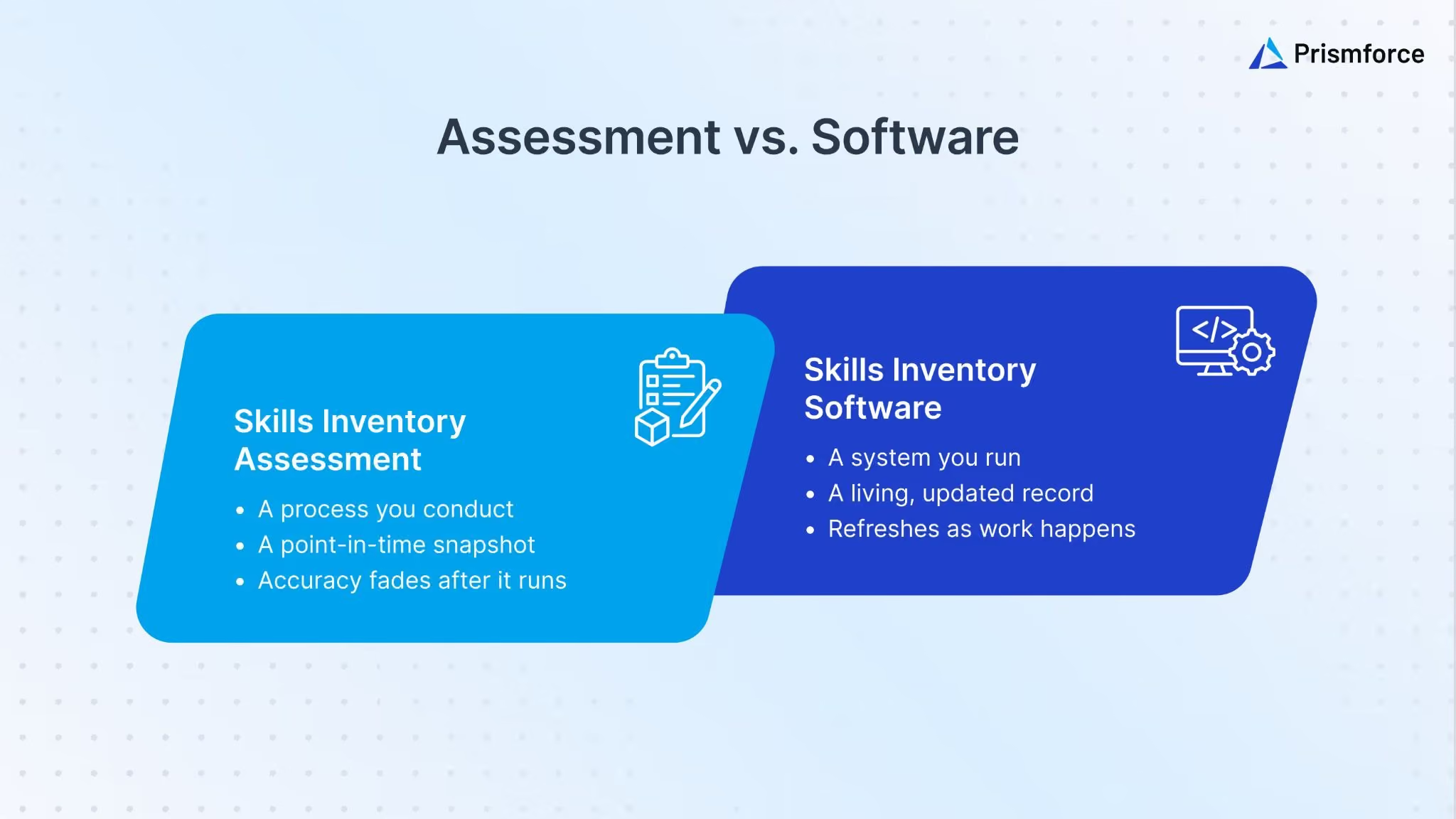
The short version: a skills inventory assessment is something you conduct, and skills inventory software is something you run. One produces a snapshot, the other maintains a living record. This article defines each, shows where they overlap, and gives you a practical rule for deciding what your organization actually needs.
What Is an Employee Skills Inventory?
An employee skills inventory is a structured record of the skills, proficiencies, certifications, and experience across a workforce, organized so the organization can answer capability questions quickly. Who can lead a cloud migration? How many people hold a given certification? Which teams are thin on a skill the next strategy cycle requires?
Both the assessment and the software exist to produce and sustain this record. The difference lies in how the record gets built and, more importantly, how it stays true.
What Is a Skills Inventory Assessment?
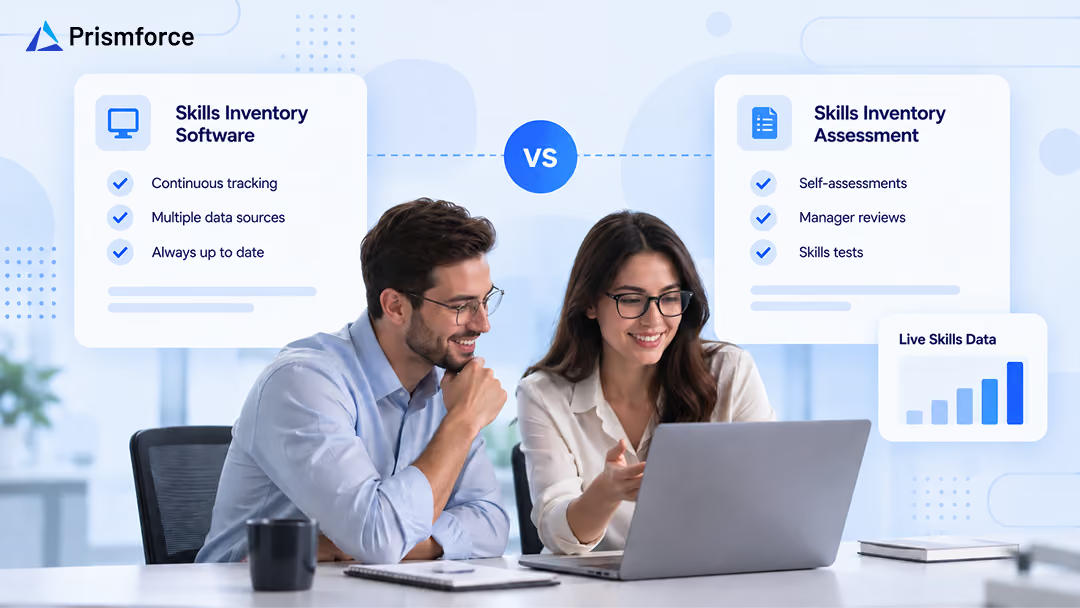
A skills inventory assessment is a structured, point-in-time exercise for identifying and evaluating the skills employees hold. Typical methods include self-rating questionnaires, manager evaluations, skill tests, certification audits, and structured interviews, usually scored against a common proficiency scale.
Run well, an assessment delivers a defensible snapshot. It surfaces hidden capabilities, calibrates proficiency claims against a shared standard, and gives leadership a baseline for planning. Many organizations run their first serious skills exercise this way, often in a spreadsheet.
The limitation is built into the format. An assessment describes the workforce on the day it ran. It has no mechanism for staying current, so its accuracy starts eroding the moment the results are compiled.
What Is Skills Inventory Software?
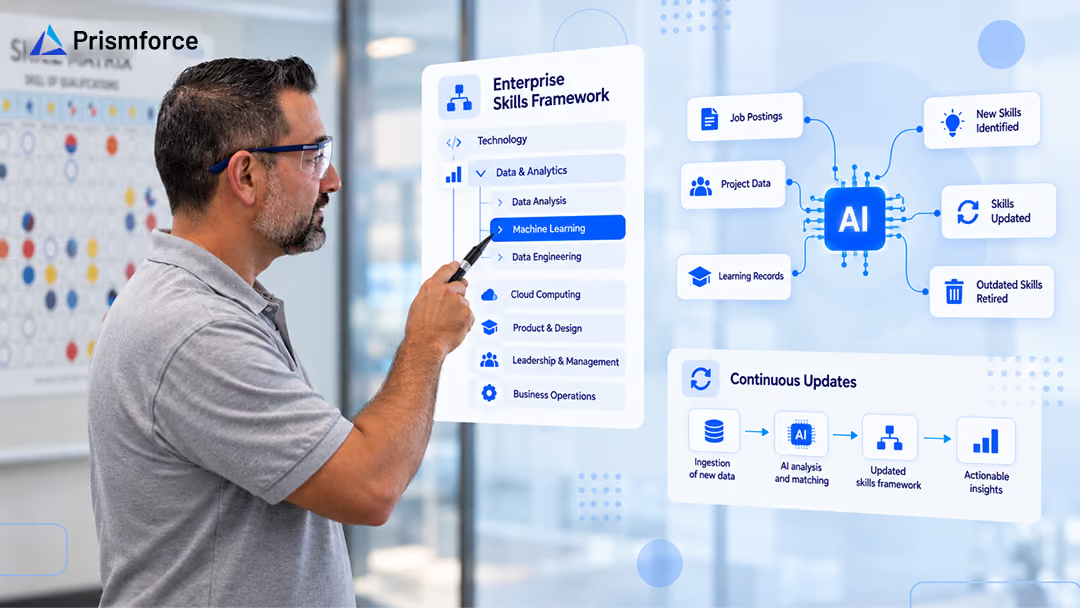
Skills inventory software is a platform that creates, validates, and continuously maintains the employee skills inventory as a living system of record. Instead of periodically asking people what they know, modern platforms read the signals work already produces, including resumes, project allocations, learning records, code repositories, and certifications, and construct profiles from evidence.
The stronger platforms then layer validation on top. SkillPrism, for example, auto-generates 360-degree skill profiles from LMS, GitHub, LinkedIn, and project data, then routes them through peer endorsements, manager review, SME workflows, and integrated assessments. The inventory maintains itself, and every entry carries evidence of where it came from.
Skills inventory software also changes what the inventory can do. A live, validated record feeds staffing decisions, skill gap analysis, internal mobility, learning recommendations, and workforce planning, because the data underneath is current enough to act on.
Skills Inventory Software vs. Assessment: The Core Differences
The table understates one asymmetry. Software can contain assessments, and the best platforms do, using them to verify high-stakes skills. An assessment cannot contain software. That is why the market has moved from assessment-first to software-first models, with assessment repositioned as a validation layer.
Why the Difference Matters: Inventories Decay Faster Than Assessment Cycles
The case for software over standalone assessments comes down to the speed at which skill data goes stale. LinkedIn's Work Change Report projects that 70 percent of the skills used in most jobs will change by 2030, and LinkedIn's Skills-First research found the skills required for a given position had already shifted around 25 percent since 2015 before AI accelerated the curve.
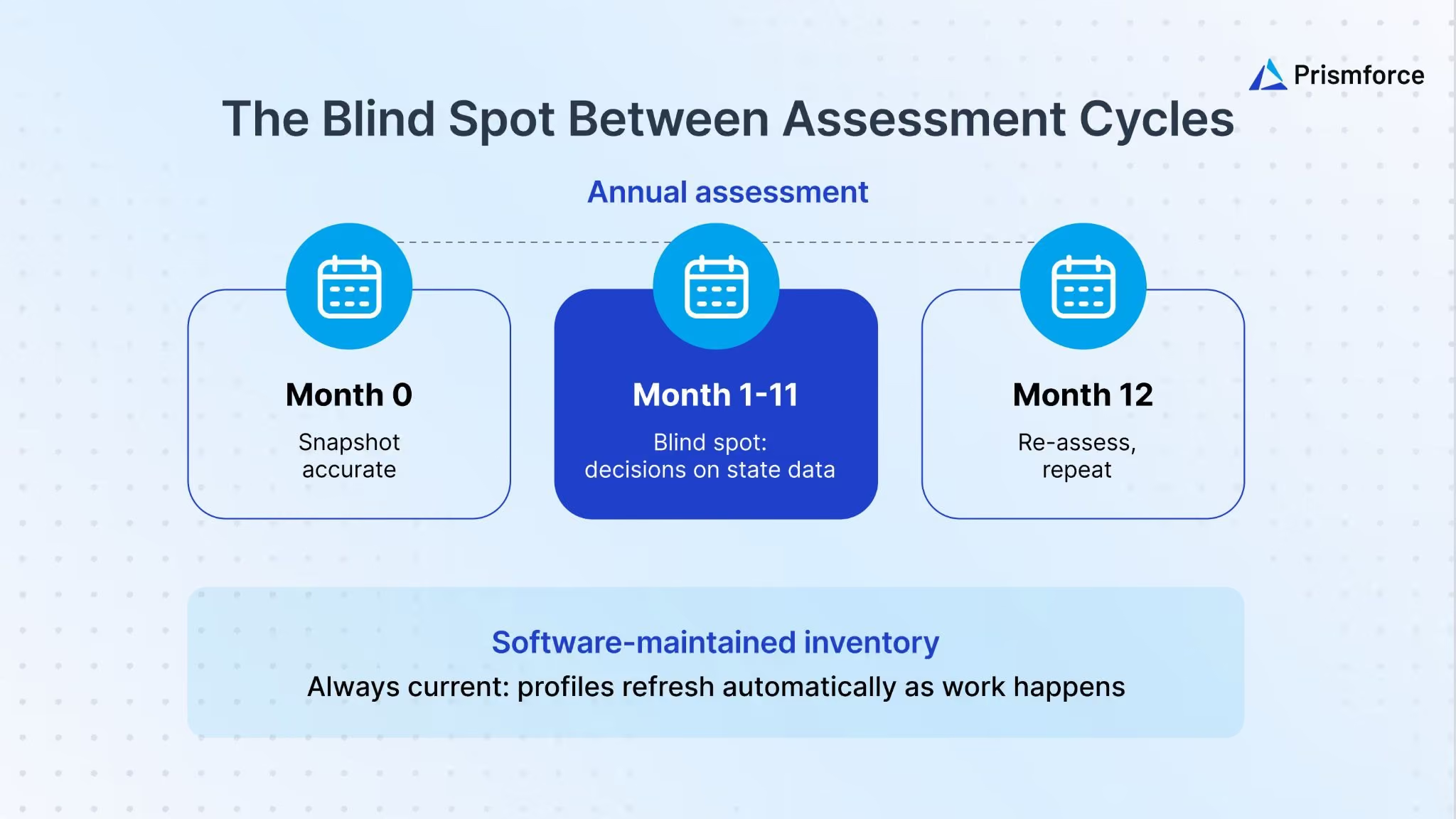
Against that pace, an annual skills inventory assessment leaves an eleven-month blind spot. Employees complete certifications, ship projects in new stacks, and pick up adjacent capabilities the record never sees. Prismforce's deployment experience shows the same pattern from the other side: when inventory upkeep depends on manual updates, well under a third of profiles stay current.
Decisions made in the blind spot inherit its errors. Staffing passes over people who quietly built the required skill. Training budgets target gaps that closed themselves. Bids get priced without knowing the capability actually on hand. The organizations that avoid this are the ones whose inventory updates at the speed work happens, which is precisely the job of software.
How Assessments and Software Work Together
Treating the two as rivals misses how mature skills inventory management actually operates. In a well-run stack, each covers the other's weakness.
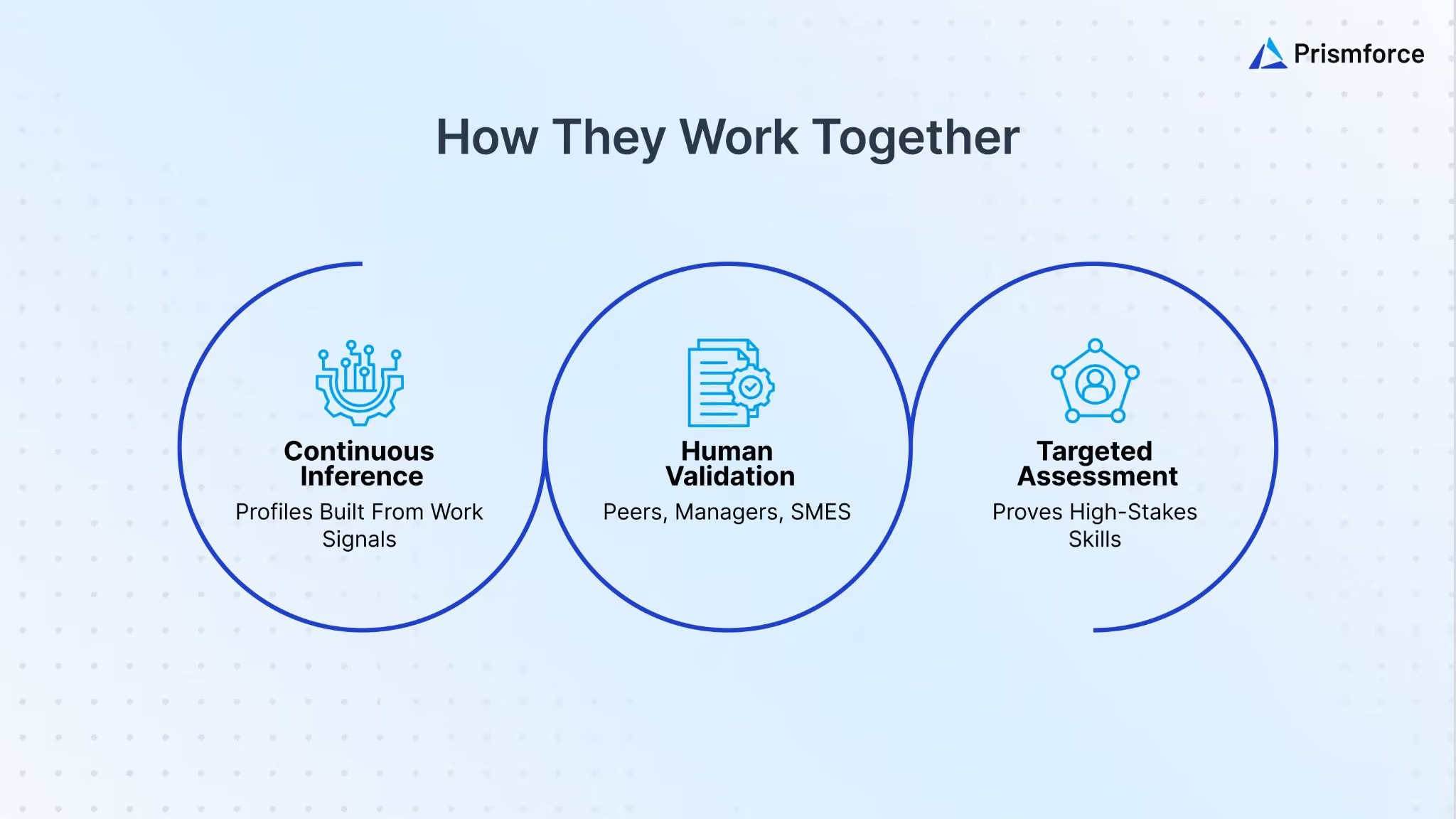
Software provides breadth and freshness. Inference across work signals keeps thousands of profiles current without asking anyone to fill in a survey, and skill adjacencies connect the inventory to near-fit talent that a static list would hide.
Assessments provide depth and proof. For skills where the cost of being wrong is high, such as client-facing certifications or safety-critical capabilities, a targeted assessment converts an inferred skill into a verified one. Inside SkillPrism, integrated assessments and endorsement workflows play exactly this role, so the inventory records not just that a skill exists but how it was proven.
The sequence matters too. Closing a gap is only real when proficiency is re-verified afterward, a principle covered in depth in our guide to choosing skill gap analysis software. Software triggers the learning; assessment confirms the outcome; the inventory updates itself with the result.
What to Look For in Skills Inventory Software
If the decision at stake justifies software, six capabilities separate durable platforms from digital spreadsheets.
Automated, multi-source profile creation. The system should build the employee skills inventory from resumes, projects, learning history, and developer signals, not from a launch survey.
Layered validation. Peer endorsements, manager review, SME workflows, and integrated assessments should all feed trust in each skill claim.
A deep, maintained taxonomy. Comparable skills need a common language. As a reference point, SkillPrism's skill framework maintains 10,000+ skills with adjacencies and 15+ attributes per skill, including proficiency, recency, and certification linkages.
Connection to decisions. The inventory should feed staffing, mobility, and planning directly, alongside broader skills intelligence use cases, rather than terminating in a report.
Forward-looking measures. Beyond current skills, leading platforms now measure readiness dimensions such as AIQ, so the inventory reflects where the workforce can go, not only where it stands.
Enterprise-grade security. Skill data is employee data. SOC 2 Type II and ISO 27001 certification and role-based access control are baseline requirements.
Organizations that get this combination right see the difference in hard numbers. Enterprises running SkillPrism report 2 to 5x increases in skill visibility, with one 25,000-employee engineering firm achieving 4x better skill discoverability through automated profiling and a standardized taxonomy.
When Is an Assessment Alone Enough?
An honest answer: sometimes it is. A standalone skills inventory assessment fits three situations.
First, a small team where a manager can genuinely hold the picture in their head and a quarterly refresh takes an afternoon. Second, a one-time due-diligence question, such as an acquisition or a single project bid, where a snapshot is the deliverable. Third, a compliance audit where the requirement is documented proof at a date, not an ongoing capability view.
Outside those cases, the assessment-only path quietly becomes the expensive path. The exercise repeats every cycle, participation fatigue grows, and every decision made between cycles runs on decaying data. The moment skill data starts driving recurring decisions, the economics favor software with assessment embedded inside it.
The Bottom Line: Process for Snapshots, Software for Decisions
A skills inventory assessment answers "what did our workforce look like on that day." Skills inventory software answers "what can our workforce do right now, and how do we know." The first is a process worth running; the second is the system that makes the answer permanent.
For most enterprises, the practical path is not choosing between them but sequencing them: adopt software that builds the inventory from evidence, and let assessments serve as the validation layer for the skills that matter most. That is the architecture behind modern skills inventory management, and it is the difference between a report leadership reads once and a record the business runs on.
See how SkillPrism builds and maintains a validated employee skills inventory automatically. Book a demo
Frequently Asked Questions
Get exclusive access to workforce and talent insights
Thank you! Your submission has been received!
Oops! Something went wrong while submitting the form.
Demo Prismforce products
Get in touch with our experts and sign up for a demo