7 Mins Read
Skill Gap Analysis Software: How to Choose the Right Tool for Your Org


Summarise This Page with AI



Key Takeaways
- Skill gap analysis software identifies gaps between current workforce capabilities and the skills the business needs now or in the future, including AI readiness, and turns those gaps into learning, hiring, and staffing actions. .
- The biggest failure mode is inaccurate input data. Analysis built on stale, self-reported profiles misleads with precision.
- Tools fall into four approaches: assessment-led, matrix, inference-led, and suite-embedded. Match the approach to the decisions the data must support.
- Closing a gap means re-verified proficiency, not training delivered.
- Evaluate on six criteria: data accuracy, taxonomy depth, gap-to-action workflows, predictive capability, integrations, and security.
- The strongest platforms now measure AI readiness gaps alongside traditional skill gaps.
Why Skill Gap Analysis Software Matters Now
Skill gap analysis software has moved from an L&D convenience to an operating necessity. Roles absorb new tools and shed old tasks quarter by quarter, and an organization that cannot see its gaps cannot close them. A skills gap assessment run on spreadsheets is outdated before the analysis finishes.
Done well, the exercise answers the questions leadership keeps asking: which capabilities does our strategy require that we lack, who is closest to filling each gap, and should we train, redeploy, or hire to close it. The wrong software automates a flawed process and lends it false precision, so this guide covers what the software does, the four approaches on the market, and how to choose.
What Is Skill Gap Analysis Software?
Skill gap analysis software maps the skills a workforce currently has, compares them against the skills the business needs, and quantifies the difference at individual, team, and organizational levels. Modern platforms then connect those gaps to actions: learning paths, internal mobility, hiring plans, and workforce planning decisions.
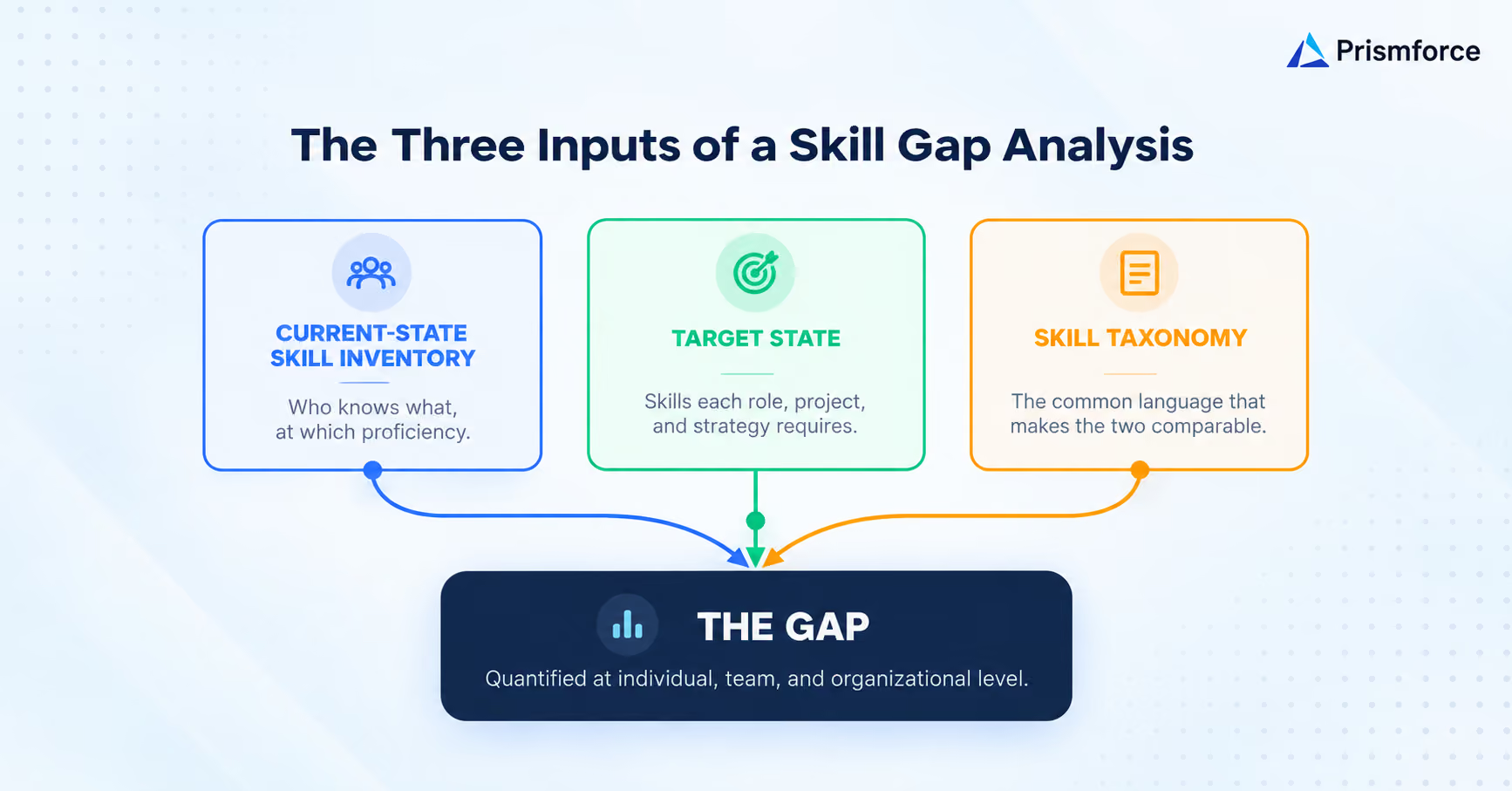
A complete skill gap analysis has three inputs: a current-state skill inventory covering who knows what at which proficiency, a target state defining the skills each role and strategy requires, and a skill taxonomy that makes the two comparable, so "React developer" and "front-end engineer" resolve to the same underlying skills.
The software's job is to keep all three inputs accurate and current, then surface the delta in a form leaders can act on. This sits inside the broader discipline of skills intelligence, where gap analysis is one output of continuously validated skill data.
The Step Buying Guides Skip: Verify Your Input Data First
Skill records decay fast. Prismforce's deployment experience shows under a third of skill profiles stay current when updates depend on manual entry, and self-rating distorts the rest.
Run a skills gap assessment on that foundation and every output inherits the error: learning budgets chase gaps that do not exist while genuine gaps stay invisible. So the first evaluation question for any skill gap analysis tool is how the platform builds and maintains the skill inventory itself, not what its dashboards look like.
The strongest answer today is multi-source inference with layered validation. SkillPrism reads resumes, project allocations, LMS activity, GitHub, and LinkedIn to construct each profile automatically, then validates the results through peer endorsements, manager review, SME workflows, and integrated assessments. The gap analysis downstream starts from evidence rather than memory.
What Are the Four Types of Skill Gap Analysis Tools?
Skill gap analysis tools follow four architectural approaches. Each produces a different quality of gap data and suits a different buyer.
1. Assessment-Led Tools
Assessment-led platforms measure skills through structured tests, then calculate gaps against role benchmarks. Scores are defensible, which matters in certification and compliance contexts. The trade-off is coverage and freshness: testing a full workforce at depth demands sustained effort, and capability demonstrated through daily work goes unmeasured between test cycles. These tools fit certified, high-stakes skill decisions.
2. Skill Matrix and Visualization Tools
Skill matrix tools replace the spreadsheet teams usually start with. Employees self-assess against role targets, managers validate, and the platform renders live heatmaps showing where teams sit against requirements. The constraint sits in the input model: self-assessment plus manager review captures perception rather than evidence. Matrix tools fit smaller organizations and single functions that need visibility quickly.
3. Inference-Led Platforms
Inference-led platforms construct skill profiles automatically from work signals such as project history, code contributions, and learning records, then run gap analysis on data that refreshes itself, with endorsement and assessment layers keeping the machine's conclusions honest.
This architecture produces the widest, freshest gap picture for the least employee effort, and it suits enterprises where gap data feeds live decisions, including staffing and internal fulfilment.
4. Suite-Embedded Capabilities
Talent and HCM suites increasingly embed skills-gap analysis within their broader skills, learning, and talent products. Because the skills layer is connected to the rest of the suite, gap insights can feed learning recommendations, internal mobility, workforce planning, and recruiting workflows.
The trade-off is specialization: gap analysis is one capability within a broader platform rather than the product's sole focus, so the depth of skills data, validation, taxonomy, and analytics varies by vendor. This approach fits organizations that prioritize native workflows and consolidated talent data within a system they already use.
How to Choose Skill Gap Analysis Software: 6 Evaluation Criteria
Use these six criteria to structure vendor evaluation. They separate platforms that look identical in demos.
1. Skill Data Accuracy
Ask how the current-state inventory gets built and maintained: which signals feed profiles, how proficiency is scored, and how claims are validated. A skill map analysis tool is only as good as the map, so prefer platforms that automate profile upkeep and will state their inference accuracy.
2. Taxonomy Depth and Adjacencies
A gap analysis needs a common language for skills. Look for a maintained ontology with proficiency definitions and skill adjacencies, which expose near-fit talent a flat list hides. As a reference for depth, SkillPrism's skill framework carries 10,000+ skills with 15+ configurable attributes each.
3. Gap-to-Action Workflows
Identifying a gap is the easy half. Evaluate whether the platform converts gaps into personalized learning paths, mobility recommendations, and hiring plans, and whether those actions execute inside tools employees already use, such as Microsoft Teams.
4. Predictive Capability
Backward-looking gap reports describe last quarter. Stronger platforms forecast demand-supply gaps before they hit delivery and measure AI readiness alongside technical skills. Prismforce's AIQ scores AI readiness across six dimensions with role-level baselines; in one 50,000-employee deployment, AIQ assessments plus targeted interventions lifted the share rated Competent or above by 12 percentage points in six months.
5. Integrations
Gap analysis draws on data scattered across HRIS, LMS, ATS, project systems, and developer tools. Confirm native integrations so skill signals flow in automatically and learning nudges reach people in the flow of work.
6. Enterprise Security and Scale
Skill data is employee data. Require SOC 2 Type II and ISO 27001 certification, role-based access control, and reference deployments at your scale.
What Does a Good Skills Gap Assessment Process Look Like?
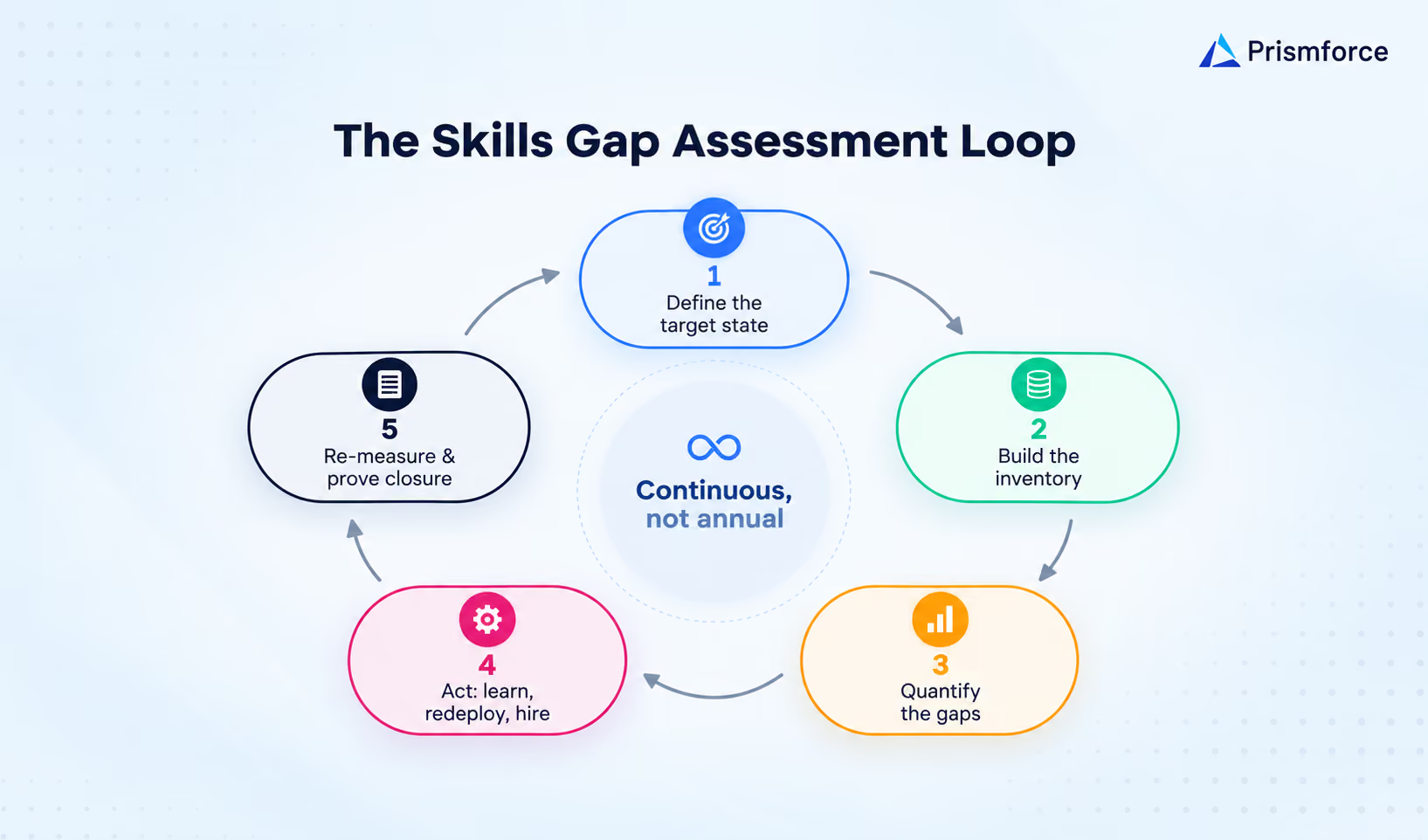
Software accelerates the process, but the process still needs a shape. A skills gap assessment runs in five steps:
- Define the target state. Translate strategy into required skills at role and specialization level, not job-title level.
- Build the current-state inventory. Let the platform infer and validate skills rather than surveying employees.
- Quantify the gaps. Compare current against target at every level, weighted by business priority.
- Act on the gaps. Route each gap to its cheapest effective fix: learning, redeployment of near-fit talent, or hiring.
- Re-measure and prove closure. Training delivered is not skill gained. Re-verify proficiency after learning and show the gap shrank.
The scale this loop must handle keeps growing. The World Economic Forum's Future of Jobs Report 2025 finds 63 percent of employers name skill gaps as the biggest barrier to business transformation, and McKinsey estimates 375 million workers may need to change occupations this decade. Annual assessment cannot keep that pace.
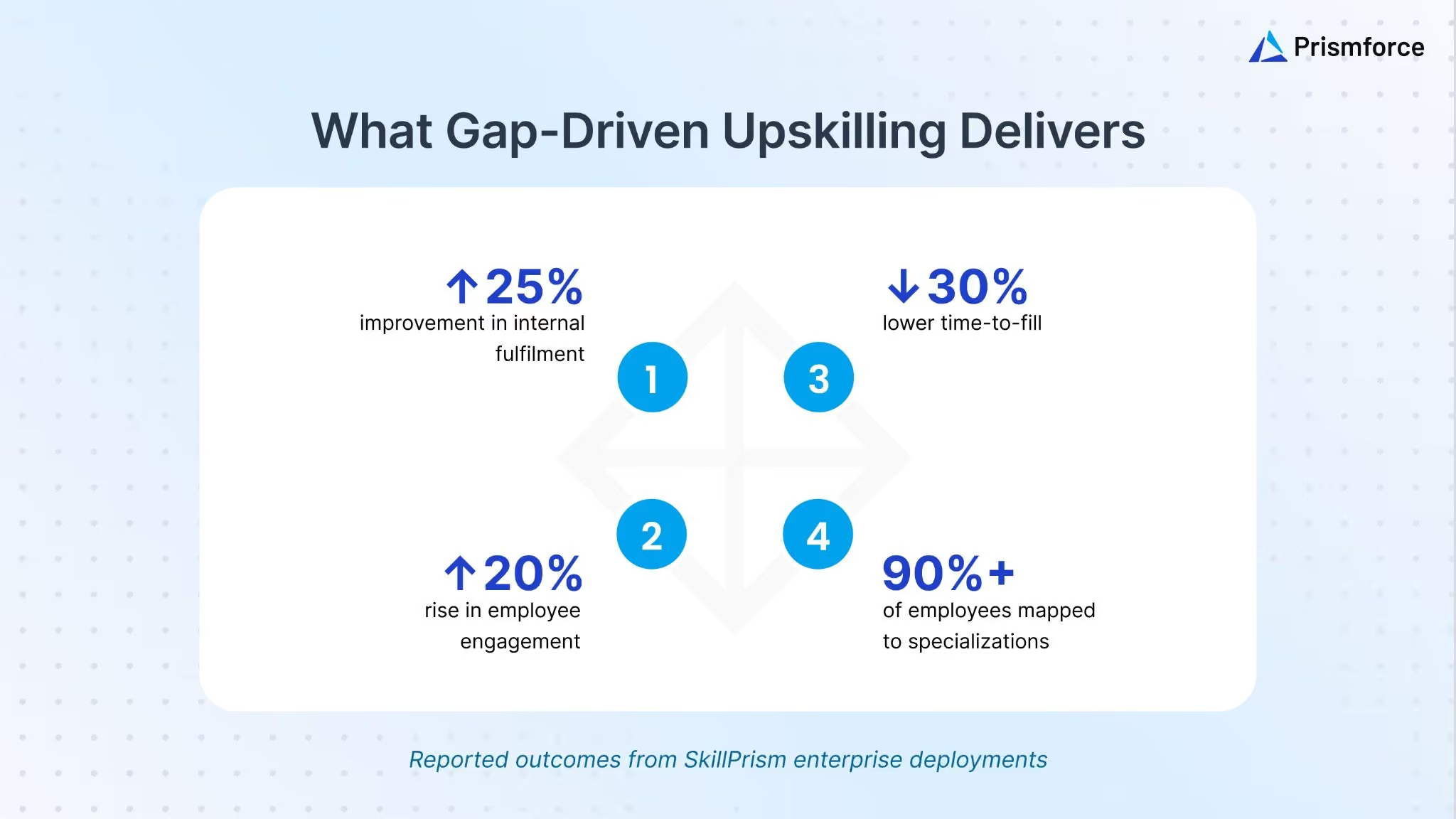
Organizations running the loop continuously report concrete outcomes. Enterprises using SkillPrism for gap-driven upskilling and redeployment have recorded 25 percent improvement in internal fulfilment, 30 percent lower time-to-fill, and a 20 percent rise in employee engagement, with one 80,000-employee company mapping over 90 percent of employees to specializations.
Common Mistakes When Buying Skill Gap Analysis Software
Five mistakes account for the majority of failed implementations, all avoidable at evaluation stage.
Buying dashboards instead of data quality. Visualization is the last mile. If the underlying profiles are stale, a beautiful heatmap displays fiction.
Counting training delivered as gaps closed. Course completion proves attendance, not capability. Insist on tools that re-verify proficiency and report closure.
Anchoring the target state to job titles. Titles hide variation. Two people sharing a title often need different skills, so define targets at role and specialization level.
Treating the analysis as an annual project. Skills shift quarterly. A one-time skills gap assessment is a photograph of a moving object.
Ignoring the AI readiness dimension. Skill gaps in 2026 include the distance between your workforce's current capabilities and AI-augmented ways of working. Platforms that cannot measure AI trainability leave the fastest-growing gap invisible.
Choosing Your Skill Gap Analysis Software: The Bottom Line
Choose skill gap analysis software by working backward from the decisions the data must support. Enterprise staffing, planning, and reskilling call for inference-led platforms with validated data, deep taxonomies, and predictive analytics. Certified scores call for assessment-led tools, quick team visibility for a matrix tool, and directional insight for a suite module.
Whichever path fits, apply the six criteria and insist on reference-backed outcomes at your scale. A skills gap assessment is only as valuable as the accuracy of its inputs and the closure it can prove. For a wider view of the platforms in this space, see our comparison of the best skills intelligence tools.
See how SkillPrism automates skill discovery, validation, and gap analysis across your workforce. Book a demo
Frequently Asked Questions
Get exclusive access to workforce and talent insights
Thank you! Your submission has been received!
Oops! Something went wrong while submitting the form.
Demo Prismforce products
Get in touch with our experts and sign up for a demo