8 Mins Read
AI Agents for Talent Operations: How Prismforce Runs the Talent Workflow on Agents

Summarise This Page with AI



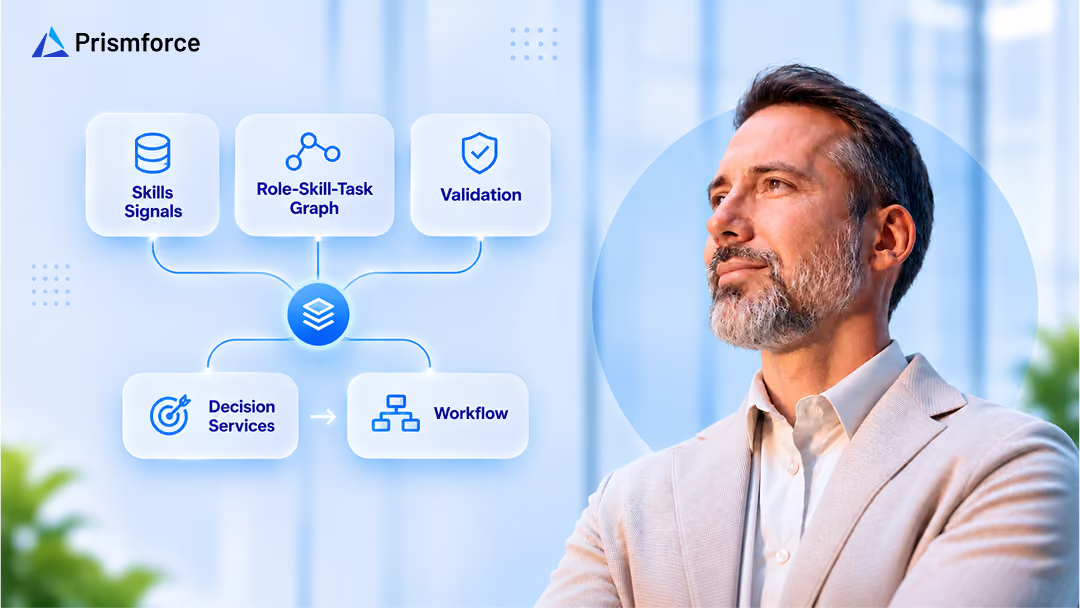
Talent operations is becoming the first enterprise function where AI agents do the work rather than describe it. For years, workforce systems recorded what had already happened: a skill typed into a profile, a requisition raised, a bench report pulled at month-end. Today, AI agents for talent operations read those signals as they appear and act on them, within rules the enterprise sets.
Prismforce has built agents across the whole talent workflow, and together they are the operating layer of its workforce transformation suite.
What Agentic Talent Operations Means
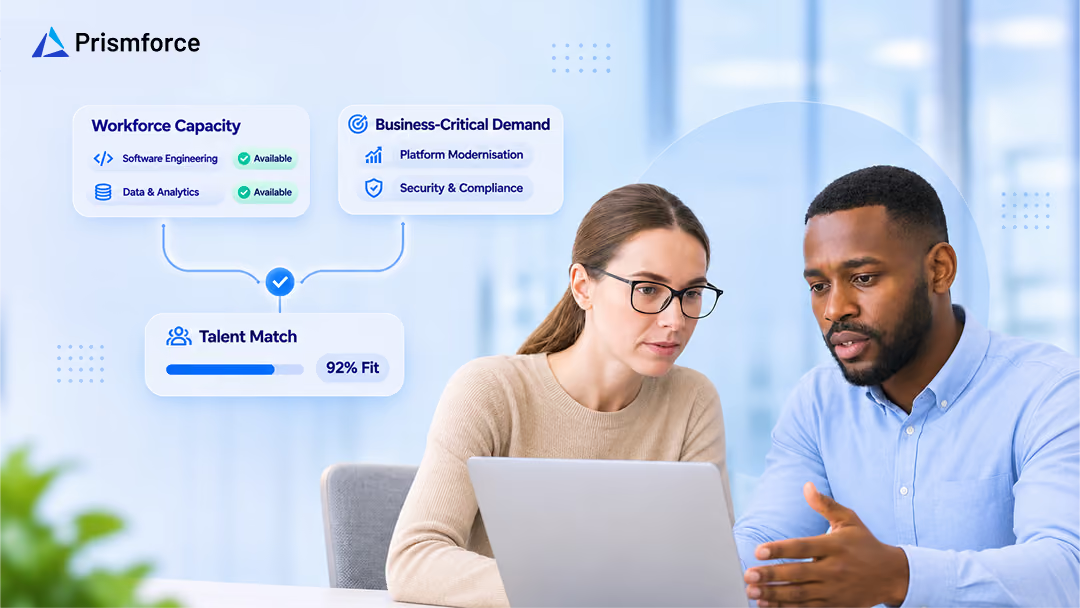
An AI agent differs from a chatbot or a dashboard in one way an operations leader will notice: it completes a task. A dashboard shows the bench is growing. An agent finds who on the bench is a near fit for open demand, drafts the redeployment proposal, and routes it for approval.
Agentic talent operations is the practice of running the talent workflow on a connected set of such agents. Each is specialised in one step, and all work from the same skills intelligence layer. The agents share context: the skill graph, live demand, availability, cost guardrails, and enterprise policy. Humans set the rules and take the consequential decisions. The agents do the rest.
Gartner predicts that 40% of enterprise applications will include task-specific AI agents by the end of 2026, up from under 5% in 2025. Talent systems will not be exempt.
Skill Data That Stays Trusted Without Manual Upkeep
Every planning, staffing, and hiring decision in a workforce transformation programme is only as good as the skill data underneath it. Self-declared profiles go stale within months, and the HR systems large firms already run cannot stop that decay on their own. SkillPrism puts four kinds of agent on the problem so the skill inventory refreshes itself.
- Discovery Agents pull skills out of resumes, project histories, certifications, and learning records. Nobody fills in a form. A profile that once depended on an employee remembering an annual update now updates as the work happens.
- Validation Agents verify what Discovery found. They triangulate assessments, peer endorsements, and machine proficiency scoring, so every skill carries a confidence level a staffing lead can act on.
- Engagement Agents keep participation high. They run conversational nudges, endorsement requests, and gamified prompts inside Microsoft Teams and Slack, where employees already spend their day.
- Development Agents turn validated data into recommendations: learning paths, next-best roles, and specialisations aligned to business demand.
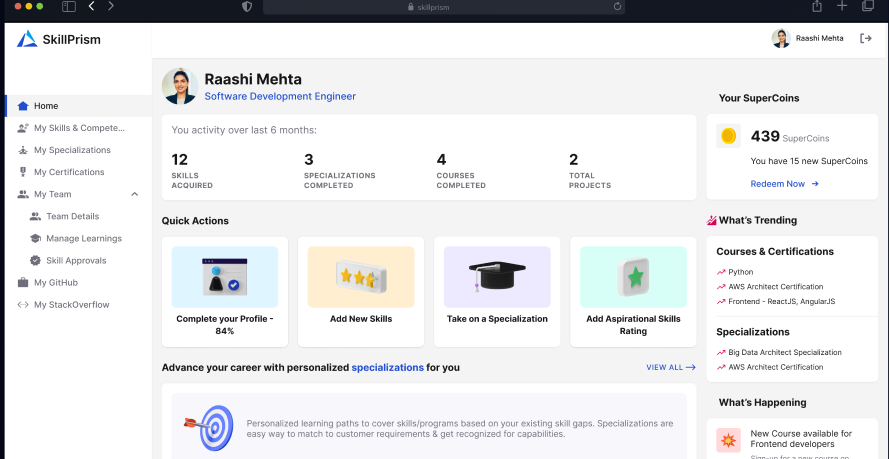
The result is a living skill inventory rather than a snapshot. With SkillPrism, organisations have discovered and mapped more than 25 million skills and lifted internal mobility by 20%. That skills intelligence foundation is what every other agent reads from.
Demand You Can See Before It Lands
Workforce planning has traditionally run on quarterly cycles and spreadsheets, so demand risk surfaces when a client escalates rather than when the signal first appears. OutlookPrism replaces that cycle with planning agents that read demand signals, talent supply, cost guardrails, and risk indicators continuously.
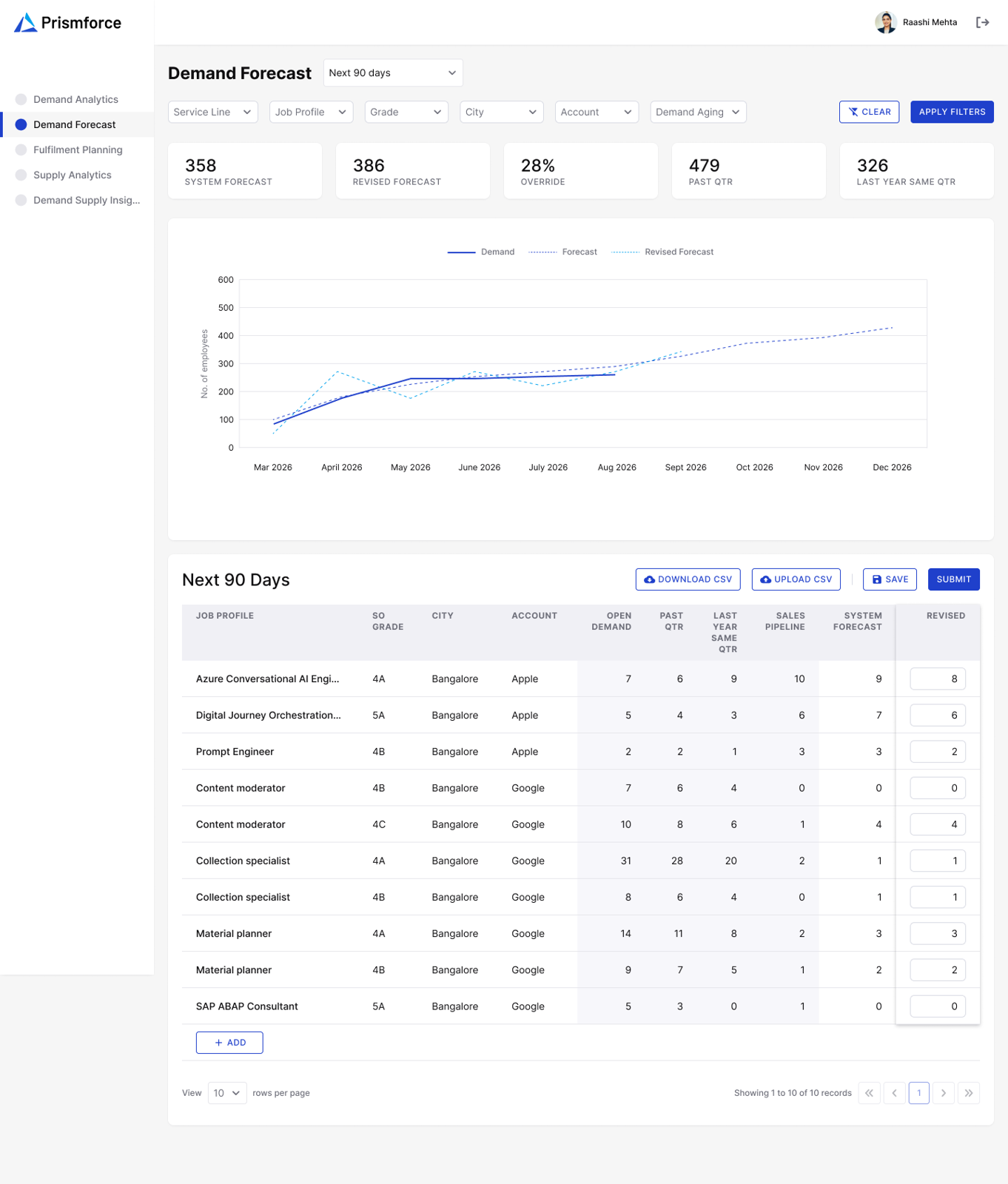
- Team composition agent builds project teams within defined cost guardrails while maximising utilisation across the organisation. A plan that satisfies the skills stops quietly breaching the margin.
- Demand risk agent identifies SKU-level demand risk, flags at-risk roles, and creates de-risking plans from available internal supply pools while there is still time to act.
- Fulfilment planning agent generates optimised fulfilment plans and then triggers the actions those plans need: initiating reskilling, creating hiring requirements, and allocating resources.
The third agent changes how planning works. A plan stops being a document handed to resourcing and becomes a set of actions already in motion. When the agent decides a gap should be closed by reskilling rather than hiring, it opens the reskilling action itself and passes the requirement downstream. With OutlookPrism, delivery organisations have seen a 3% to 5% uplift in billable utilisation from each of these agents.
Faster Fulfilment and a Smaller Bench
Fulfilment is where agentic talent operations pays back fastest, because every day a role sits open or a person sits idle has a billable cost. IntelliPrism runs four agents across the fulfilment cycle, each fixing a point where the cycle usually stalls.
- Demand Creation Agent fixes the first stall, poor demand. It validates roles, skills, specialisations, and job descriptions as a requisition is raised, suggests corrections, and shows real-time match density so the requester can see whether the ask is fillable before it enters the queue.
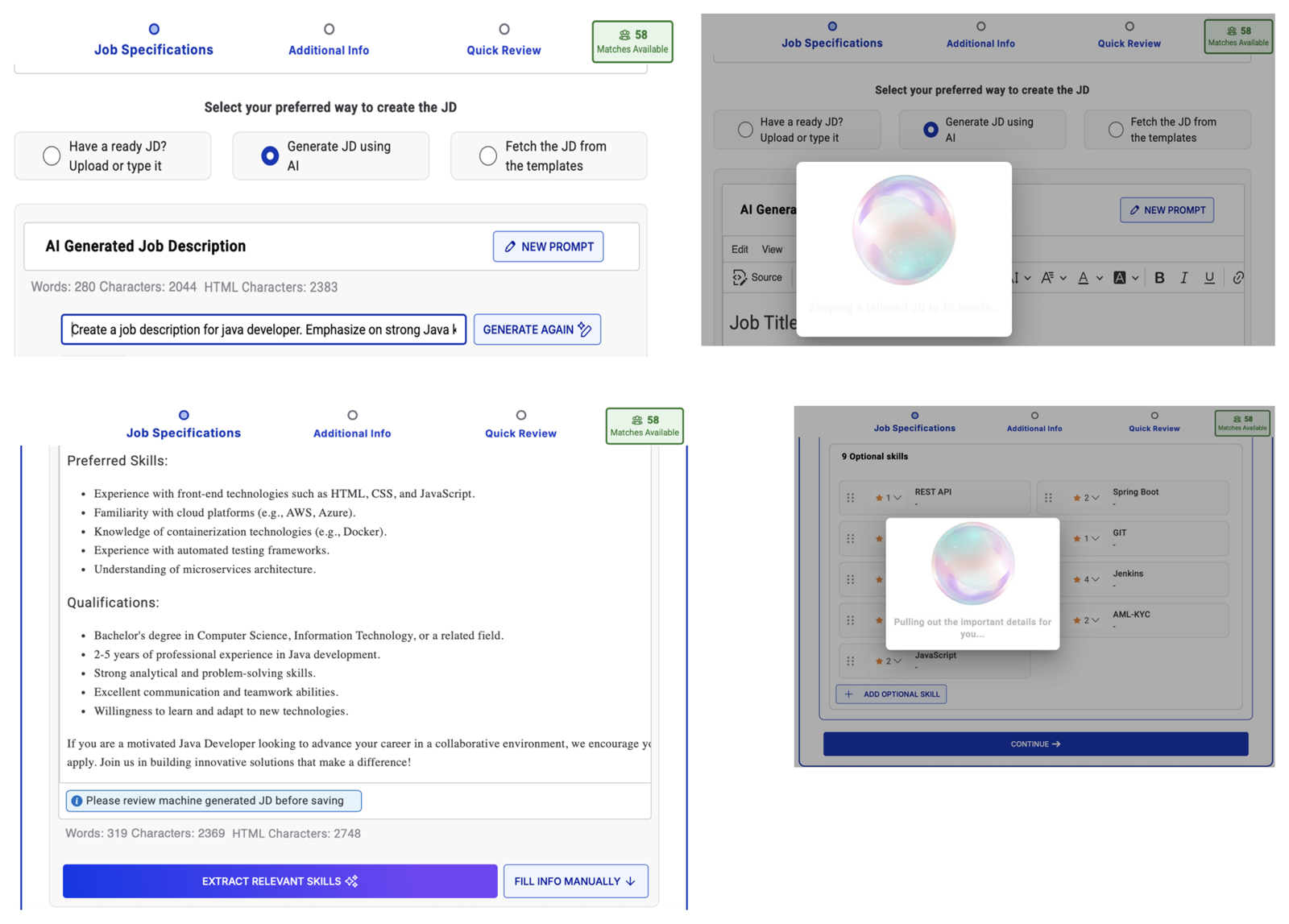
- Staffing Agent fixes the search. It proposes compliant staffing plans that balance skills, cost, availability, and location, working from the validated skill data SkillPrism maintains rather than from self-declared profiles.
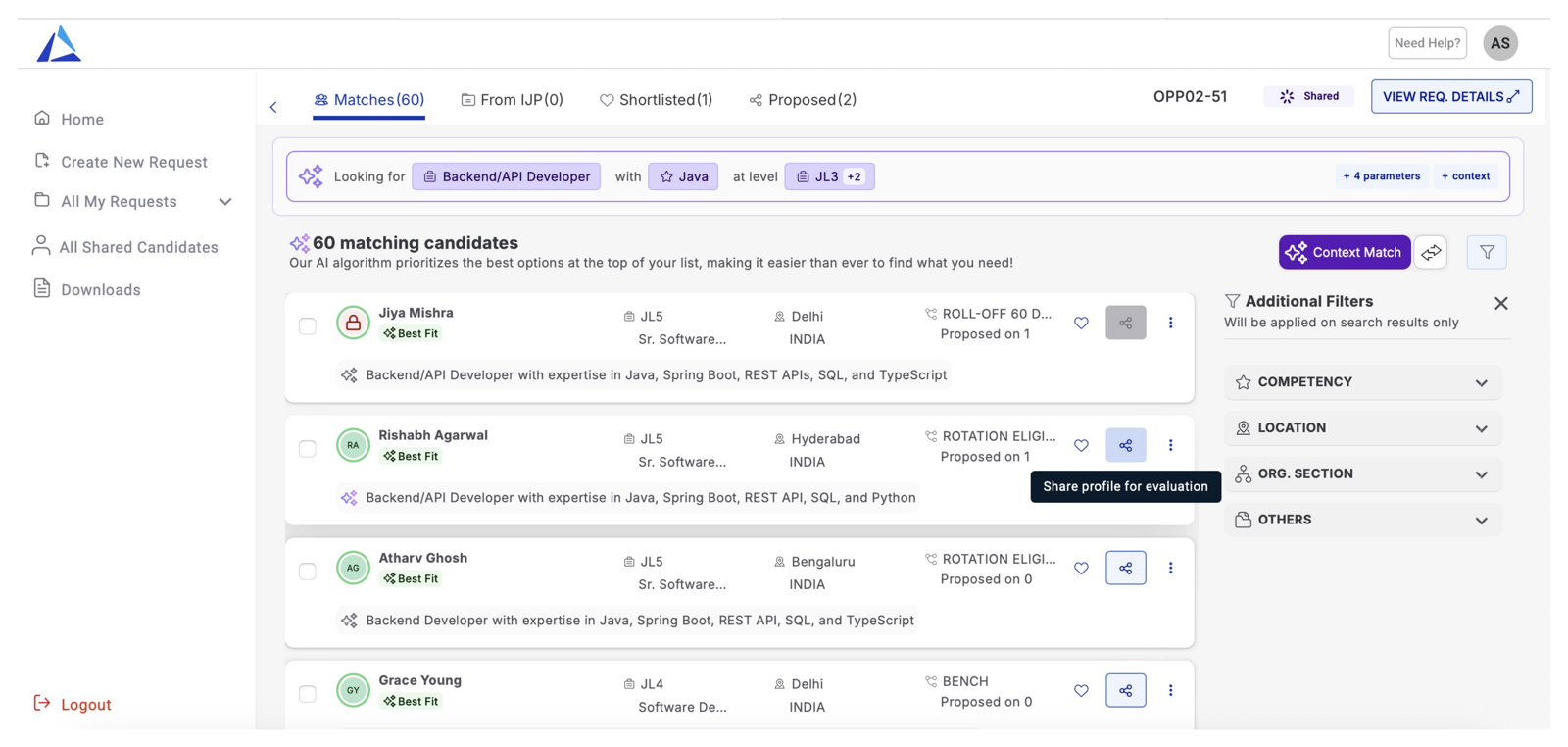
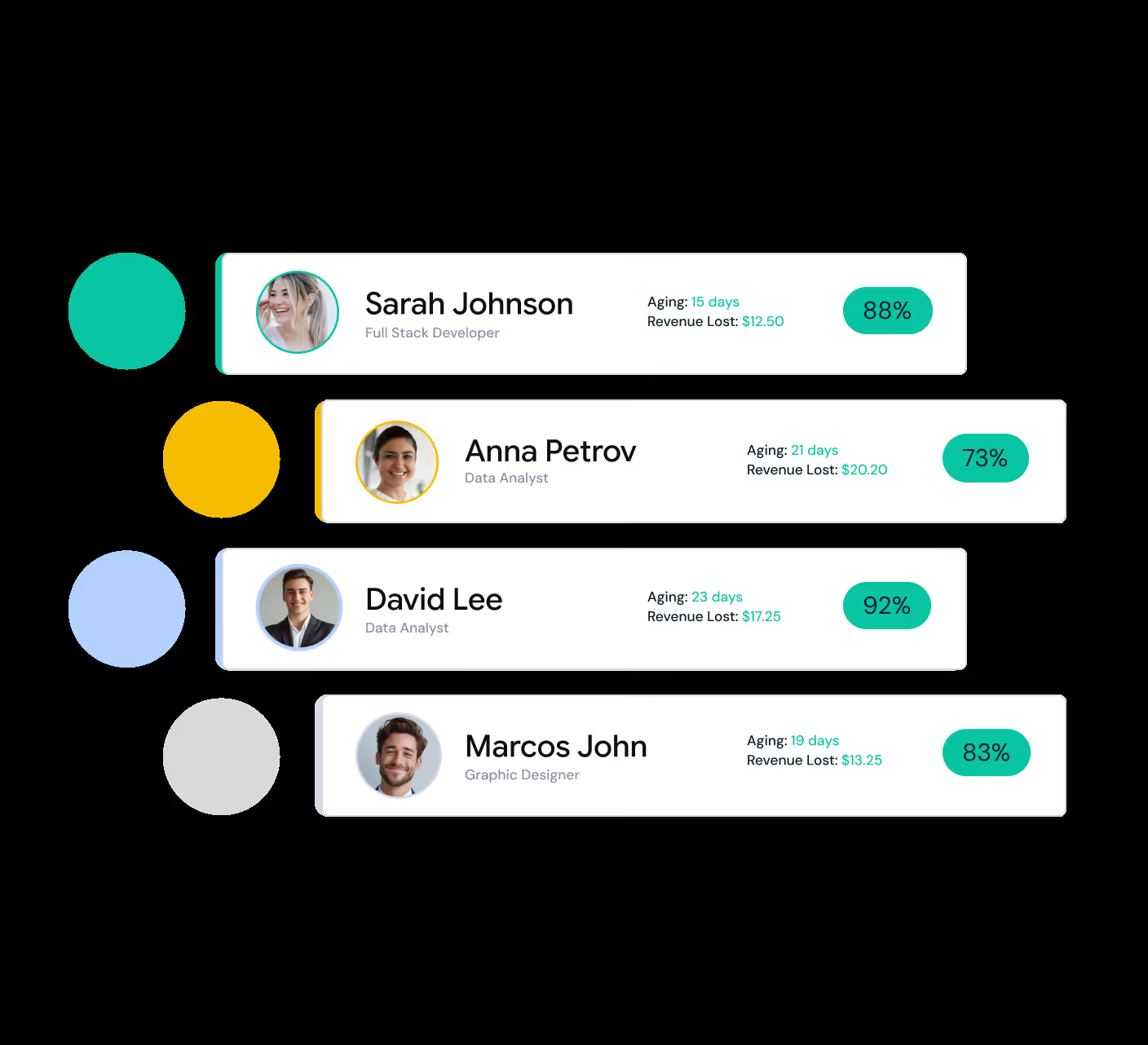
- Bench Management Agent fixes the bench. It monitors ageing and revenue at risk by individual, surfaces near-fit demand, enforces bench policy timelines, and pushes redeployment before the cost compounds into a quarterly review.
- Internal and Client Interview Prep Agent fixes the last stall, the client interview. It runs AI-driven mock interviews with associates before they meet the client. Selection outcomes improve and the client sits through fewer interviews.
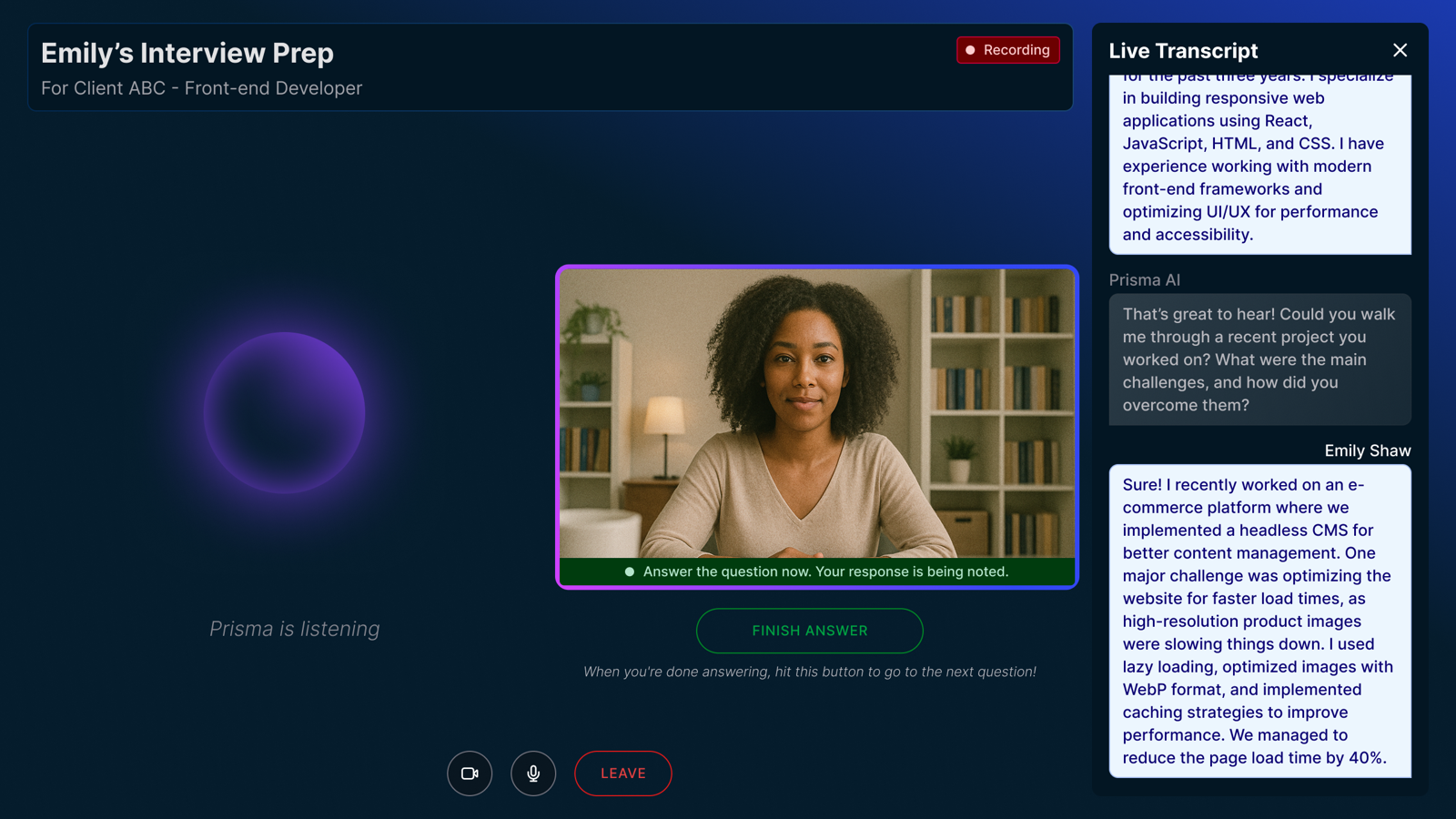
With IntelliPrism, IT services firms have cut fulfilment cycles by 15%, raised internal fulfilment by 50%, and reduced bench cost by 10%. Alongside them, talent utilisation agents keep available people aligned to priority work so idle capacity never accumulates unnoticed.
Internal Mobility Before External Hiring
A large share of external hiring happens for roles an existing employee could have filled with a small, visible skill gap closed. Three agents make sure the inside has been checked before a hiring requirement leaves the building.
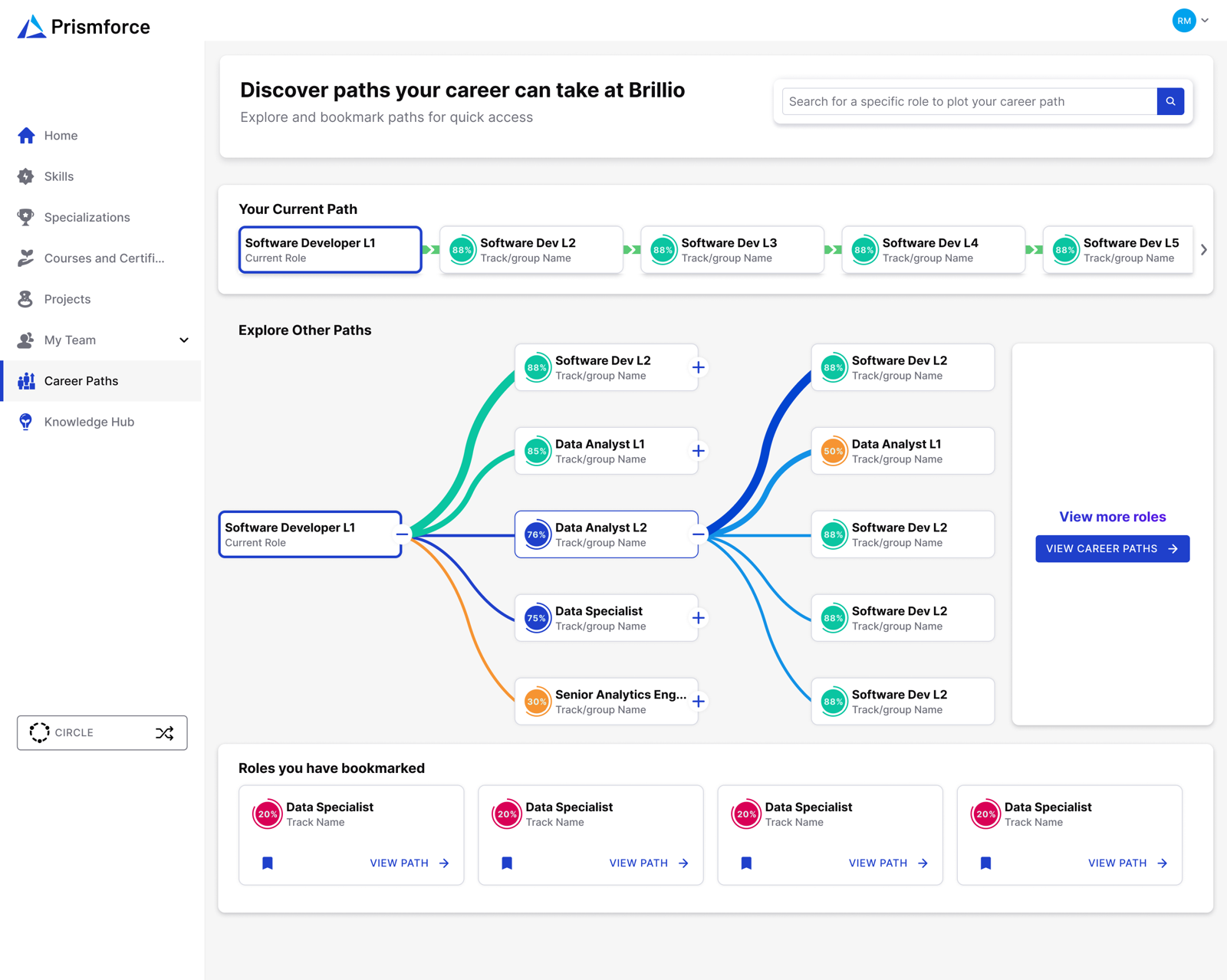
- Mobility Agent works from the employee's side. It draws on the same skill graph as the staffing agents but asks a different question: which open roles is this person close to, and what would close the gap.
- IJP Assist guides employees through internal job postings, surfacing the roles they are a near fit for and the skills that would get them there, so applying inside the company is as easy as applying outside it.
- Bench Management Agent works from the demand side. One agent asks who is idle and where they could go. The other asks who wants to move and whether a role exists.
CareerPrism supplies the career pathing and skill gap view that makes the recommendation credible to the employee. With CareerPrism, enterprises have seen internal mobility rise by 30% to 40% through self-driven career visibility.
Hiring at Speed
When internal supply cannot meet the demand, the fulfilment planning agent in OutlookPrism raises a hiring requirement, and the agents in SelectPrism take over the first mile of recruitment.
- Pre-screening agents qualify high-volume applicants against the role's skill requirements across voice, IVR, and email, before a recruiter opens a profile.
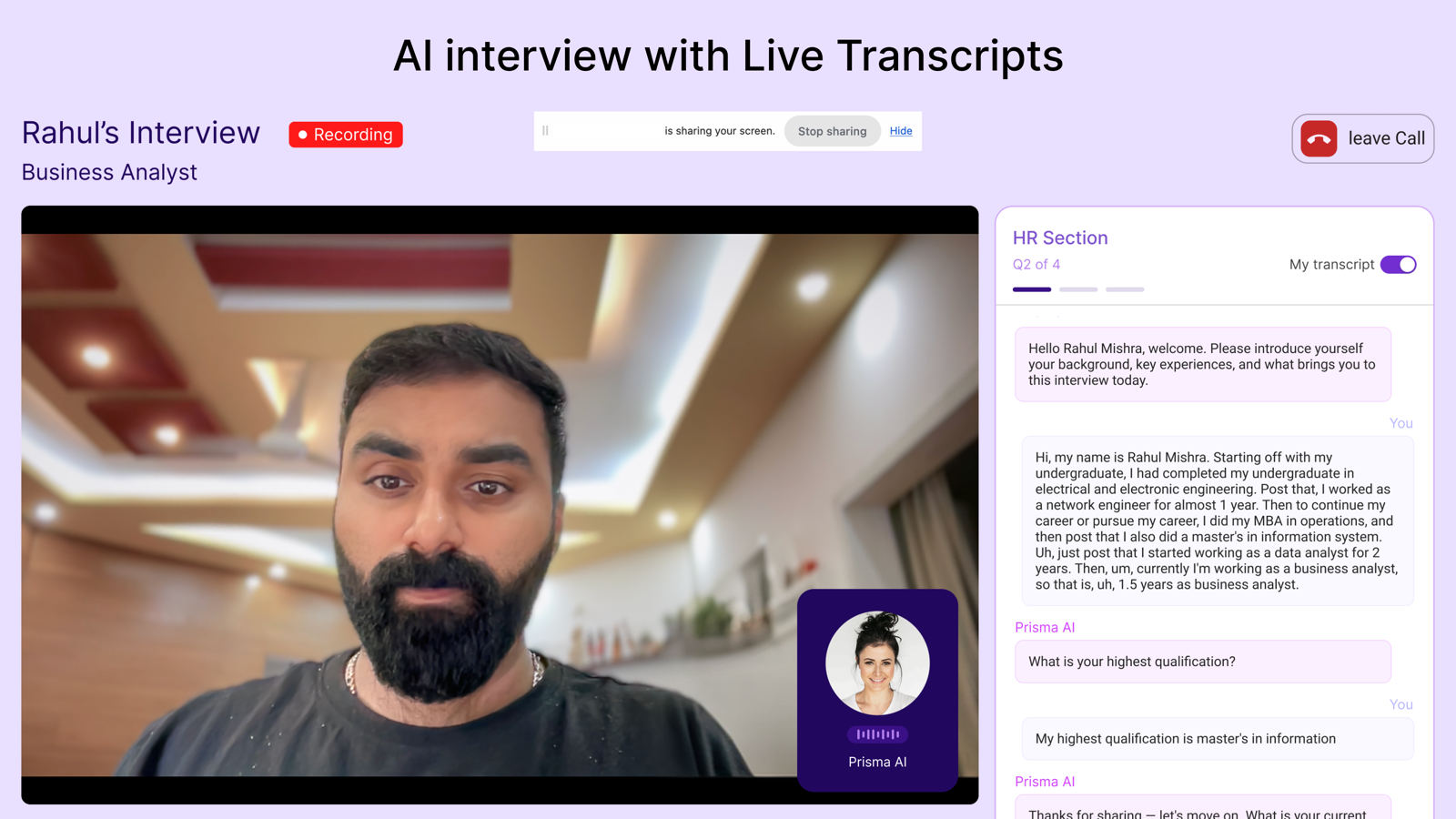
- AI Interview Agent conducts conversational voice and video interviews that adapt to the candidate's answers. It assesses technical and functional skills, runs integrity checks, and produces explainable evaluations. With SelectPrism, hiring teams have completed more than 100,000 AI-led interviews.
- Ranking and shortlisting agents convert interview and assessment output into decision-ready reports with fitment scores. A hiring manager reviews a ranked shortlist rather than transcripts.
- Interview Copilot for Hiring Managers, currently in beta, sits alongside the human interviewer in later rounds and offers suggestions in real time.
With SelectPrism, enterprises have brought time-to-hire down by 35% and recruitment cost down by 20%. Recruiters keep the final decision on every hire. The agents shorten the path to it.
Learning That Follows Demand Rather Than a Catalogue
The Learning Agent personalises development paths based on evolving roles, skills, and business demand. It draws on the Development Agents in SkillPrism and the career pathing in CareerPrism. What makes it part of agentic talent operations rather than a recommendation engine is where its triggers come from.
- Employee-led trigger. An employee explores a next role, and the Learning Agent lays out the path and the skills that need to be built.
- Demand-led trigger. The fulfilment planning agent decides that a demand gap should be closed through reskilling rather than hiring. The reskilling action originates in the demand plan, not in a course catalogue, and the learning is pointed at a gap the business will pay for.
With CareerPrism, L&D teams have seen learning adoption improve by 20% to 30% when learning is linked to future roles.
The Agents That Work Across More Than One Workflow
Several agents do not belong to a single product. Knowing where they overlap is what makes the workflow feel connected rather than modular.
- Fulfilment planning agent (OutlookPrism) starts in planning, but its auto-actions land in three other workflows: reskilling in the learning flow, hiring requirements in SelectPrism, and resource allocation in IntelliPrism.
- Development Agents and the Learning Agent (SkillPrism, CareerPrism) share one recommendation logic that serves skills intelligence, career pathing, and demand-driven reskilling.
- Bench Management Agent and Mobility Agent (IntelliPrism, CareerPrism) both redeploy people before external hiring. One works from open demand, the other from the employee's aspirations.
- Interview Prep Agent and AI Interview Agent (IntelliPrism, SelectPrism) both run AI-led interviews, for different people. The first prepares an existing associate for a client interview. The second interviews an external candidate.
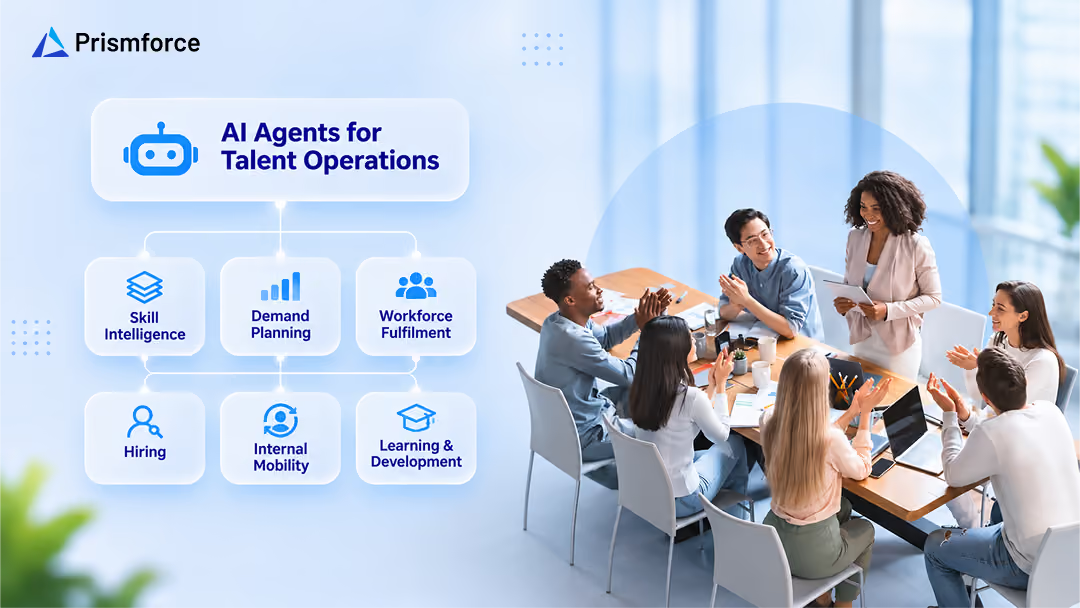
- Skills Agent, Planning Agent, Matching Agent, Mobility Agent, Learning Agent are the five workflow-level agents that group the specialised agents by what they do: skills, planning, staffing, mobility, and learning. A buyer evaluating the suite will usually meet these five first.
One Demand Signal, Six Agents
The value of AI agents for talent operations is easiest to see in a single sequence. A delivery leader raises demand for four cloud engineers on a new account.
- The Demand Creation Agent validates the skills and shows low match density.
- The demand risk agent flags the role and checks internal supply.
- The Bench Management Agent finds two near-fit engineers aging on the bench.
- The Mobility Agent finds a third who has asked for cloud roles and holds the adjacent skills.
- The Learning Agent opens a targeted reskilling path for that engineer.
- The fulfilment planning agent raises one external hiring requirement, and the SelectPrism pre-screening and interview agents fill it.
No agent in that sequence needed a person to move the work to the next step. The humans approved the redeployments and confirmed the hire.
Governance for AI Agents in Talent Operations
Gartner also predicts that over 40% of agentic AI projects will be cancelled by the end of 2027, citing unclear business value and inadequate risk controls. AI agents for talent operations make decisions about people's careers and a firm's billable revenue. The controls cannot be an afterthought.
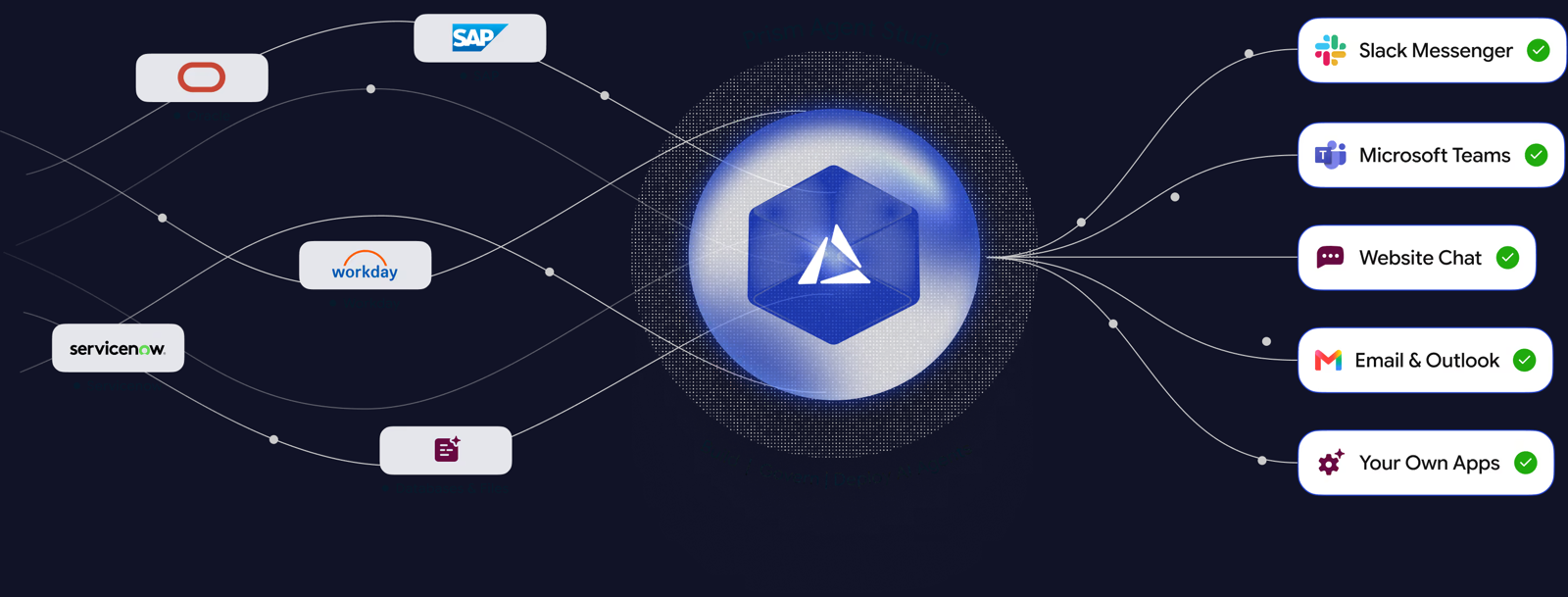
- One governed access layer. Prismforce connects its agents to enterprise systems through a Model Context Protocol (MCP) layer, so every agent gets the same governed access to enterprise context.
- Role-based access controls what each agent can read and act on.
- Transparent execution lets a resourcing lead see why the Staffing Agent proposed a particular team.
- Cost guardrails bound what the planning agents can commit to.
- Human decisions. A redeployment, an offer, or a role change stays with a named person.
The agentic talent operations layer runs more than 100 domain-specific agents for over 400,000 users, with native integrations to SAP, Oracle, Workday, and ServiceNow. Agentic talent operations at this scale works because the agents run inside the tools teams already use.
Where to Start With AI Agents for Talent Operations
Agents amplify whatever data they are given. An enterprise with stale skill profiles will get faster, more confident wrong answers. So the practical sequence for AI agents for talent operations follows the order of the work itself. Fix skills intelligence first, then let the planning, staffing, mobility, hiring, and growth agents build on it.
The groundwork before any of that is a readiness baseline: knowing, at role level, how prepared the workforce is for AI-driven work. Prismforce's AIQ framework measures exactly that. Teams that want to see the agents run against their own demand data can book a demo and bring a live requisition.
Frequently Asked Questions
What are AI agents for talent operations?
AI agents for talent operations are specialised software agents that complete tasks across the talent workflow: validating demand, matching people to roles, redeploying bench talent, interviewing candidates, and recommending learning. They act on live signals within enterprise rules rather than only reporting on what has already happened.
How is agentic talent operations different from HR automation?
Automation follows a fixed script. An agent reads context, makes a judgement within guardrails, and acts, then hands the result to the next agent. Agentic talent operations connects those agents across skills, planning, staffing, mobility, hiring, and growth so the whole workflow runs on shared skills intelligence.
How many AI agents does Prismforce have?
Prismforce runs more than 100 domain-specific agents across its workforce transformation suite. The named agents cover skills discovery and validation, workforce planning, demand creation, staffing, bench management, interview preparation, internal mobility, pre-screening, AI interviewing, and personalised learning.
Do the agents replace recruiters and resource managers?
No. The agents handle discovery, matching, drafting, and monitoring. People approve redeployments, confirm hires, and set the guardrails the agents work within. In SelectPrism, recruiters retain control of the final hiring decision, and the same principle applies across the staffing and mobility agents.
Which systems do the Prismforce agents integrate with?
The agents connect to enterprise systems through an MCP layer with role-based access, and Prismforce has native integrations with SAP, Oracle, Workday, and ServiceNow. Engagement Agents operate inside Microsoft Teams and Slack, and Prismforce is an SAP Build Partner and a ServiceNow Authorized Build Partner.
Where should an enterprise start with AI agents for talent operations?
Start with skills intelligence. Every planning, staffing, mobility, and hiring agent depends on trusted skill data, so deploying Discovery and Validation Agents first gives the rest of the suite an accurate foundation. Baselining AI readiness with a framework such as AIQ helps prioritise where agents will pay back fastest.
How do the agents handle governance and bias?
Each agent works within role-based access, cost guardrails, and policy-driven governance, with transparent execution so a lead can see why a recommendation was made. In hiring, SelectPrism evaluations are explainable and bias-aware, with humans making the final decision on every candidate.
Get exclusive access to workforce and talent insights
Thank you! Your submission has been received!
Oops! Something went wrong while submitting the form.
Demo Prismforce products
Get in touch with our experts and sign up for a demo