12 mins
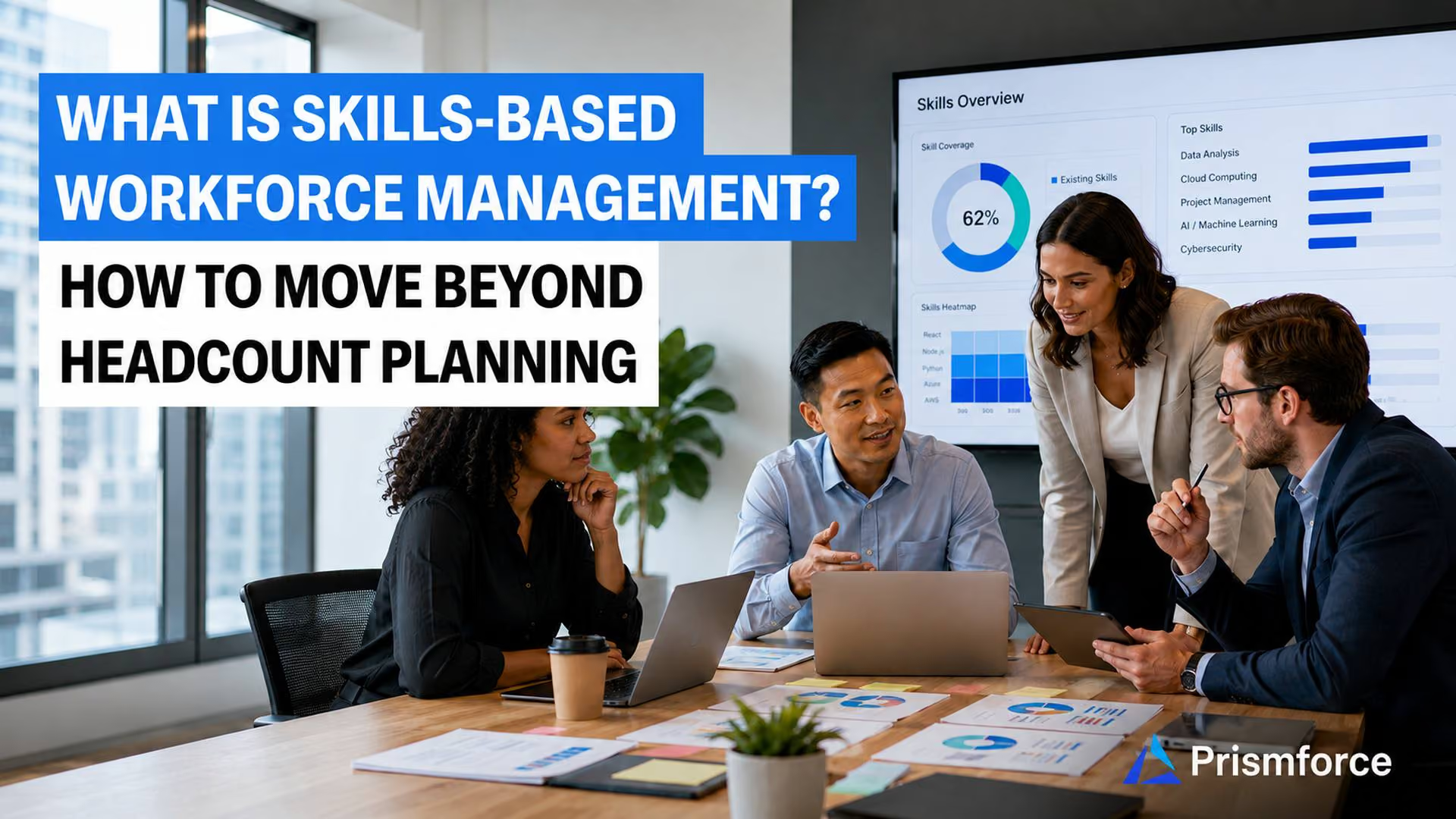
What Is Skills-Based Workforce Management? How to Move Beyond Headcount Planning

Summarise This Page with AI



Skills-based workforce management is the practice of planning, deploying, and developing your people around skills rather than job titles or headcount targets. Instead of asking how many people a team needs, it asks what capabilities the business requires, who already has them, and how to close the gap through staffing, reskilling, or hiring.
For IT services firms and global capability centers (GCCs), that shift matters more than for most businesses. Your margin lives in how quickly you can match the right skills to incoming demand. Headcount tells you how many people sit on the roster. It says nothing about whether those people can staff the project that lands next quarter. This guide covers what skills-based workforce management is, how it differs from traditional headcount planning, why the old model is straining, and a practical path to make the move.
What is skills-based workforce management?
Skills-based workforce management treats skills as the primary unit of planning. Every person is represented as a live set of capabilities, proficiency levels, and adjacent skills they could grow into, rather than a single job title or a line in a headcount budget.
That representation feeds four decisions: who gets staffed on which project, who is ready for an internal move, who needs reskilling, and where you genuinely need to hire. The model depends on having current, trustworthy skills data, which is why most firms that adopt it pair it with a skills intelligence layer that infers and updates skill profiles automatically instead of relying on resumes that go stale the day they are filed.
Put simply: role-based planning counts seats. Skills-based planning understands capability.
Skills-based workforce management vs. headcount planning: what is the difference?
Headcount planning answers a budgeting question: how many people do we need, and what will they cost? Skills-based workforce management answers an operating question: what can our workforce actually do, and what will the business need it to do next? Here is where the two approaches diverge, dimension by dimension.
The distinction is not academic. A firm can be fully staffed to headcount and still lose a bid because nobody on the bench holds the cloud certification the client requires.
Why is headcount planning breaking down?
Three forces are pulling the ground out from under role-and-number planning.
Skills are changing faster than org charts. The World Economic Forum's Future of Jobs Report 2025 found that 39% of workers' core skills will change by 2030, and that 63% of employers now see skill gaps as the single biggest barrier to business transformation. A plan built around fixed roles cannot keep pace with that rate of change, because the roles themselves are moving.
Most firms cannot see their own skills. Gartner research found that only 8% of organizations have reliable data on the skills their workforce currently possesses and which skills matter most to business success. When skill data is scattered across resumes, spreadsheets, and manager memory, planning defaults to the one number everyone can agree on: headcount. That number is easy to track and almost useless for deployment decisions.
The cost shows up on the bench. In an IT services business, every day a skilled person sits unstaffed is pure margin leakage, and every project that slips because the right skills were not found in time costs more. Headcount planning has no mechanism to spot a redeployment before it becomes idle cost. Skills-based planning does.
What are the benefits of skills-based workforce management?
Faster, better staffing. When demand comes in, you match people by skill fit and readiness instead of trawling titles and availability. Everest Group notes that organizations can reduce deployment time from 8–9 weeks to around 4 weeks by staggering skilling and training for employees moving into new roles; it also recommends competency mapping to make internal mobility more effective. Faster deployment means fewer project delays and less revenue left on the table. This is the core of effective project staffing.
Lower bench cost. A clear view of skills turns the bench from a cost center into a redeployable pool. You can see who is one short course away from being deployment-ready and act before they go idle.
Stronger internal mobility and retention. Skills data surfaces moves people cannot see for themselves, which keeps careers, and high performers, inside the company. Deloitte's research on skills-based organizations found they are markedly more likely to place talent effectively, innovate, and retain their best people than role-bound peers. Done well, this powers real internal mobility rather than another talent marketplace nobody uses.
More defensible workforce plans. Planning in skills gives finance and delivery a shared, evidence-based view of where to hire, where to reskill, and where to redeploy, rather than negotiating headcount numbers in the dark.
How do you move from headcount planning to skills-based workforce management?
Moving to a skills-based model is a sequence, not a switch. These six steps take you from counting people to managing capability.
- Build a living skills inventory. This is the heart of skill management: capturing what your people can actually do, drawn from project history, certifications, learning records, and AI inference, not just self-reported resumes. The goal is a profile that updates itself as work happens.
- Agree on a common skill language. Two teams calling the same capability by different names will break any plan. A shared skill taxonomy gives the whole organization one vocabulary for skills and proficiency levels, which is closely tied to how you handle competency management.
- Connect skills to demand. Translate project requirements, role definitions, and the sales pipeline into the specific skills they need. This is what lets you compare supply against demand in the same units instead of guessing.
- Plan capacity in skills, not just seats. Layer skills onto your workforce planning so you can see gaps by capability and by time, then decide deliberately whether to staff, reskill, or hire for each one. When you do hire, you can run it as skills-based hiring against the exact gap.
- Activate the data in daily decisions. Skills data only pays off when it drives staffing, mobility, and reskilling in the flow of work. A dashboard nobody acts on is a skills database, not skills management.
- Measure and close gaps continuously. Track fulfillment rates, bench days, time-to-staff, and the size of your priority skill gaps, then feed what you learn back into hiring and learning plans.
Common mistakes to avoid
- Treating it as an HR-only project. Skills-based management touches delivery, resourcing, and finance. If those teams are not in the room, the plan stays theoretical.
- Boiling the ocean. You do not need every skill for every employee on day one. Start with the roles and skills that drive staffing and revenue, then expand.
- Relying on resume data alone. Resumes capture what someone did, not what they can do now. Without inference and validation, the inventory is out of date immediately.
- Buying dashboards with no activation layer. Visibility without action changes nothing. The real test of a skills program is whether it changes who gets staffed on Monday morning.
Getting started with skills-based workforce management
The shift from headcount to skills is less about a single tool and more about giving the business one trustworthy view of what its people can do, kept current and wired into real decisions. That is the layer most firms are missing today.
Prismforce builds that layer for IT services firms and GCCs. SkillPrism creates and maintains live skill profiles through AI inference, IntelliPrism matches those skills to project demand, and the platform connects the two, so workforce planning, project staffing, and internal mobility all run off the same data.
Frequently asked questions
What is the difference between skills-based and role-based workforce planning?
Role-based planning organizes the workforce around job titles and headcount targets, asking how many people each function needs. Skills-based planning organizes around capabilities, asking what skills the business requires and who holds them. The practical difference shows up in staffing: role-based matches by title, while skills-based matches by actual skill fit and readiness.
Is skills-based workforce management only for large enterprises?
No. The model scales down, though the payoff is largest where staffing decisions are frequent and skill-dependent, such as IT services firms and global capability centers. Smaller teams can start with a focused inventory of the skills that drive revenue and expand from there, rather than mapping every capability at once.
What data do you need to start?
Most firms already hold the raw material: project and assignment history, certifications, learning records, and HRIS data. A skills intelligence platform infers and standardizes skills from those sources, so you do not have to wait for every employee to self-report before the inventory becomes useful.
How is this different from a skills inventory or our HRIS?
A static skills inventory or HRIS record captures a snapshot that ages quickly. Skills-based workforce management keeps profiles current through inference and validation and, more importantly, connects them to live decisions about staffing, mobility, and reskilling. The data is a means, not the end.
How long does it take to implement?
It depends on data readiness and scope, but the move is staged rather than all-or-nothing. Many firms start with one high-volume use case, such as project staffing or internal mobility, prove the impact, then expand. You see value from the first activated use case, not only at the end of a full rollout.
Does AI replace workforce planners?
No. AI does the work humans cannot do at scale: inferring skills, keeping profiles current, and surfacing matches across thousands of people in seconds. Planners and resource managers still make the judgment calls. The aim is to give them better information, not to remove them from the decision.
Get exclusive access to workforce and talent insights
Thank you! Your submission has been received!
Oops! Something went wrong while submitting the form.
Demo Prismforce products
Get in touch with our experts and sign up for a demo